
Reline or replace a bolted steel tank?
A spent coating on a sound shell is a reline. A shell, fasteners or foundation at their limit is a replacement. Remaining structural life decides it, and a condition assessment measures it.
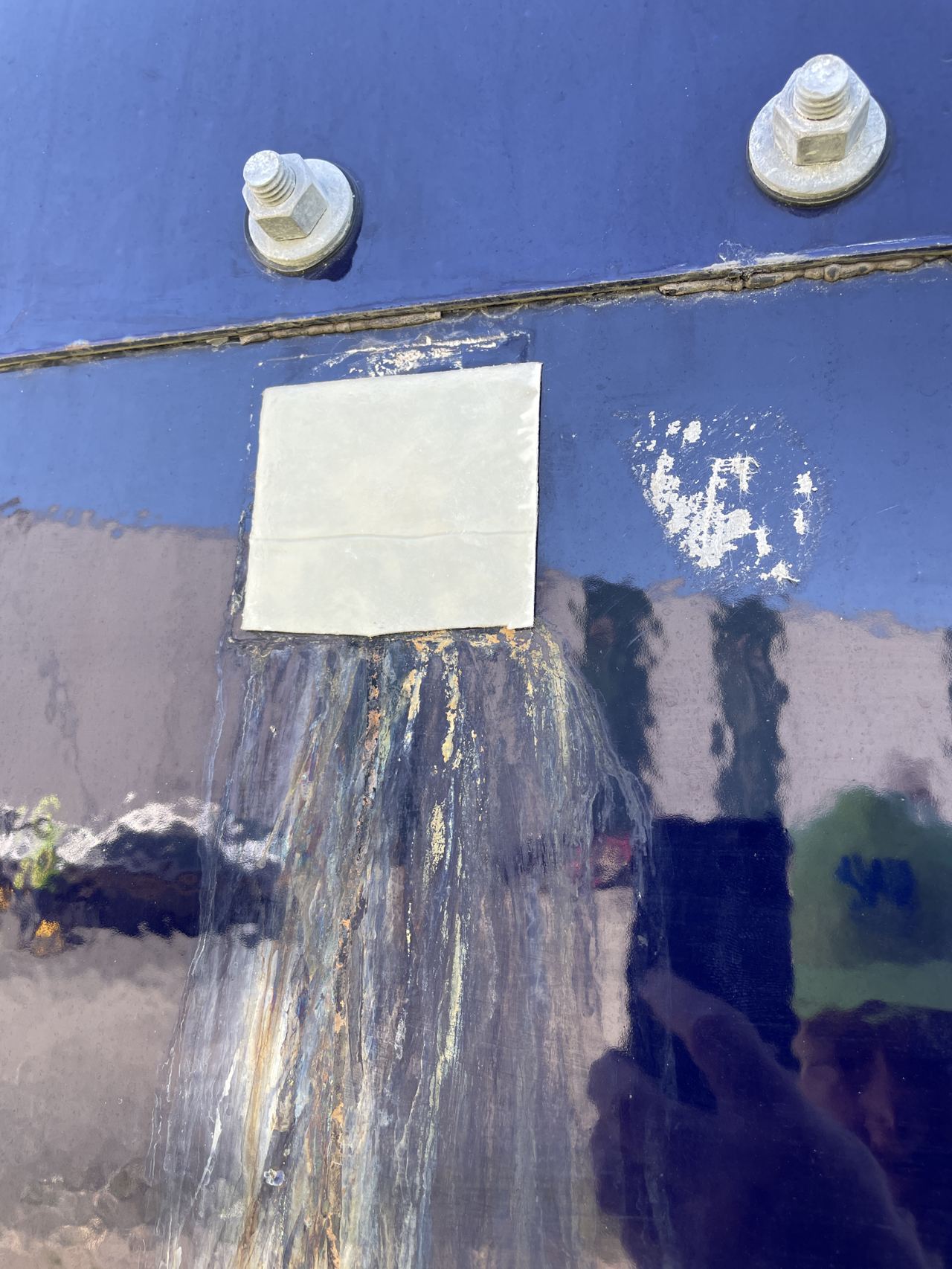
Reline a bolted steel tank when the panels have enough remaining thickness, the bolt holes and seams are serviceable, the foundation is stable and the tank still meets its duty. The coating is the problem, not the structure. Replace it when wall loss, bolt-hole corrosion, foundation movement, a non-renewable coating, or a change in capacity or code means a new lining would outlive the tank under it. A general framework for all tank types is in our article Repair, Reline, or Replace an Aging Tank?
The decision, measurement by measurement.
Bolted tanks add considerations that welded tanks don’t have: hundreds of seams, thousands of bolt holes, and panels that can be replaced one at a time.
| What the assessment measures | Points to reline | Points to replace |
|---|---|---|
| Panel thickness (UT readings) | Remaining thickness supports the planned service life | General wall loss below what the design requires |
| Bolt holes and panel edges | Light corrosion that cleans up | Elongated or wasted holes across many panels |
| Seams and sealant | Sealant failed but joints sound and resealable | Seams opened by distortion or settlement |
| Existing coating | Renewable system (FBE, liquid epoxy) at end of life | Non-renewable system (glass-fused-to-steel) at end of life |
| Foundation | Level, drained, stable | Differential settlement or a failing ringwall |
| Capacity and code | Tank still fits the duty and current requirements | Needs more volume, a different service, or code upgrades the shell can’t take |
| Downtime | A planned outage is acceptable | Can’t take the tank out of service; build new alongside and switch over |
Reline
Drain and clean, blast to the level the lining system requires (near-white metal, SSPC-SP 10/NACE No. 2, is typical for immersion), treat seams and fasteners, and apply a lining selected for the service. For potable water it must be certified to NSF/ANSI/CAN 61. Coatings and linings · lining selector.
Partial rebuild
Bolted construction allows a middle path: replace the worst panels, rings, floor or roof, reseal, then reline. Worth pricing when damage is concentrated, such as the bottom ring or the vapor-space panels.
Replace
A new bolted, shop-welded or field-welded tank, matched to the service so the same failure doesn’t repeat. Compare tank types or design one in 3D.
Replace with a refurbished tank
Where budget or lead time is the constraint, a refurbished pre-owned tank can be blasted, relined and set for the new duty.
First cost favors relining. Lifecycle cost decides.
A reline wins on bid day. It loses over thirty years if the shell needs replacing partway through the lining’s life, because the lining gets paid for twice. The question to answer is how many years of structural life remain compared with the expected life of the new lining.
Our 50-year lifecycle cost calculator compares a reline against new tank options on net present value and equivalent annual cost, charges deferred replacement against the reline, and shows which assumption would change the answer.
Standards that apply
- AWWA D103: design of factory-coated bolted steel water tanks, including replacement panels.
- AWWA M42: steel water storage tank inspection and maintenance.
- SSPC-SP 10 / NACE No. 2: near-white blast cleaning, typical for immersion linings.
- NSF/ANSI/CAN 61: certification for linings in contact with potable water.
- API 653: inspection, repair and reconstruction for welded petroleum tanks; often referenced for industrial and fuel tanks.
Reline or replace FAQ
Is it cheaper to reline or replace a bolted steel tank?
On first cost, relining a structurally sound tank is almost always cheaper than replacing it. Over the remaining life of the asset the answer can flip: if the shell, fasteners or foundation will need replacement a few years after the reline, the lining is paid for twice. The deciding input is remaining structural life, which a condition assessment measures.
Can a glass-fused-to-steel (GFS) tank be relined?
Not in the usual sense. Glass-fused coatings are fired onto the steel in the factory and cannot be renewed in the field, so when the coating reaches the end of its life, replacement is usually the practical answer. Localized damage can sometimes be repaired, and a condition assessment shows how much of the tank is affected.
What has to be true for a reline to be worth it?
Enough remaining wall thickness for the planned service life, panels and bolt holes without significant metal loss, a foundation that is stable, seams that can be resealed, and a tank that still meets capacity and code. If any of those fail, the reline buys less time than it costs.
How long does a tank reline last?
A correctly selected and applied lining on properly prepared steel commonly gives one to two decades of service in water storage, and less in aggressive service. Surface preparation, film thickness, curing and matching the system to the chemistry matter more than the product name.
What does an assessment for reline vs replace include?
Ultrasonic thickness readings on panels and floor, adhesion and film thickness tests on the existing coating, seam and fastener condition, foundation level and drainage, appurtenances and roof, and a check of capacity and current code requirements. The output is a map of what is surface damage and what is structural.
Related tank problems
Last reviewed 2026-11-09. General guidance only; a condition assessment of the actual tank governs any repair decision.
Weighing reline vs replace? Start with a free photo review.
Send a wide shot, close-ups of the worst corrosion, seams and bolts, and the nameplate. A credentialed inspector reviews them remotely at no cost and tells you which way the tank appears to lean and what an assessment would need to confirm.
- Send 3–4 photos and the nameplate. One wide shot of the whole tank, close-ups of the problem, and the data plate if you can reach it.
- An inspector reviews them remotely. We look for the likely failure mode and how far along it is.
- You get a short written screening. It says whether this can wait, should be scoped for an inspection, or needs attention now.
A desk screening is an informal read from photos, not an inspection, condition rating or fitness-for-service finding. If the tank is actively leaking or you suspect structural failure, call 330-265-1776 now. Prefer a full site inspection? Request one here.