Shop-Welded Steel · Rectangular & Round

Welded in the shop. Set in a day.

Two shop-welded tank families from one source. Rectangular systems field-set without a single field weld. Round cylindrical tanks — the most common tank on most sites — are rolled, welded, lined, and coated in the plant, then delivered complete. Either way, fabrication risk stays off your jobsite.

200K+
Sq. Ft. Fabrication
AWS D1.1
Certified Welding
ISO 9001
Quality Management
Weeks
Not Months
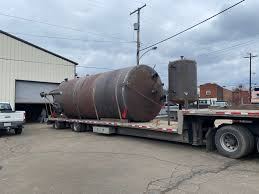
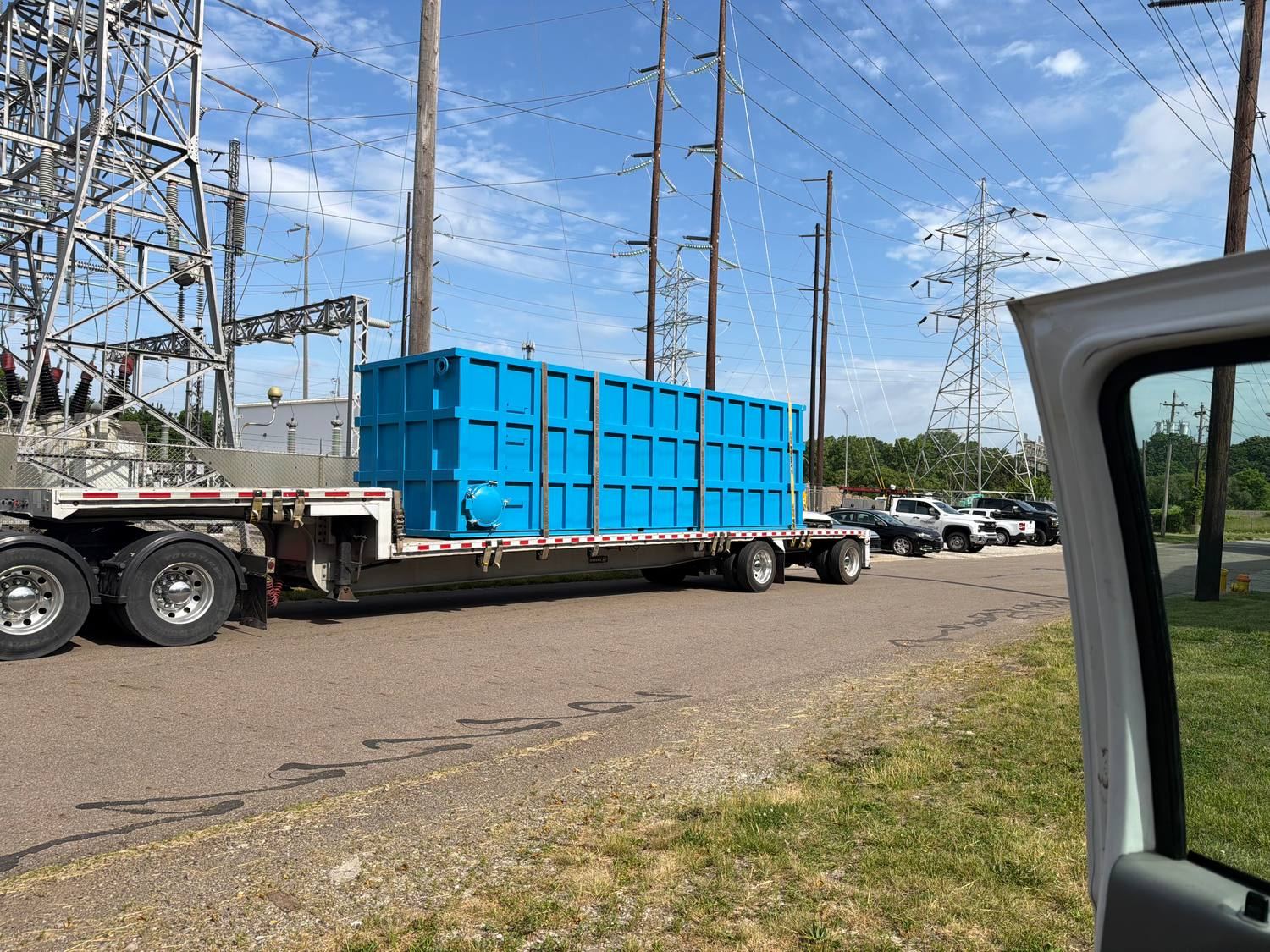
Blue shop-welded steel tank loaded on a flatbed trailer, coated and ready to ship from the plant
Shop-Welded · Rectangular
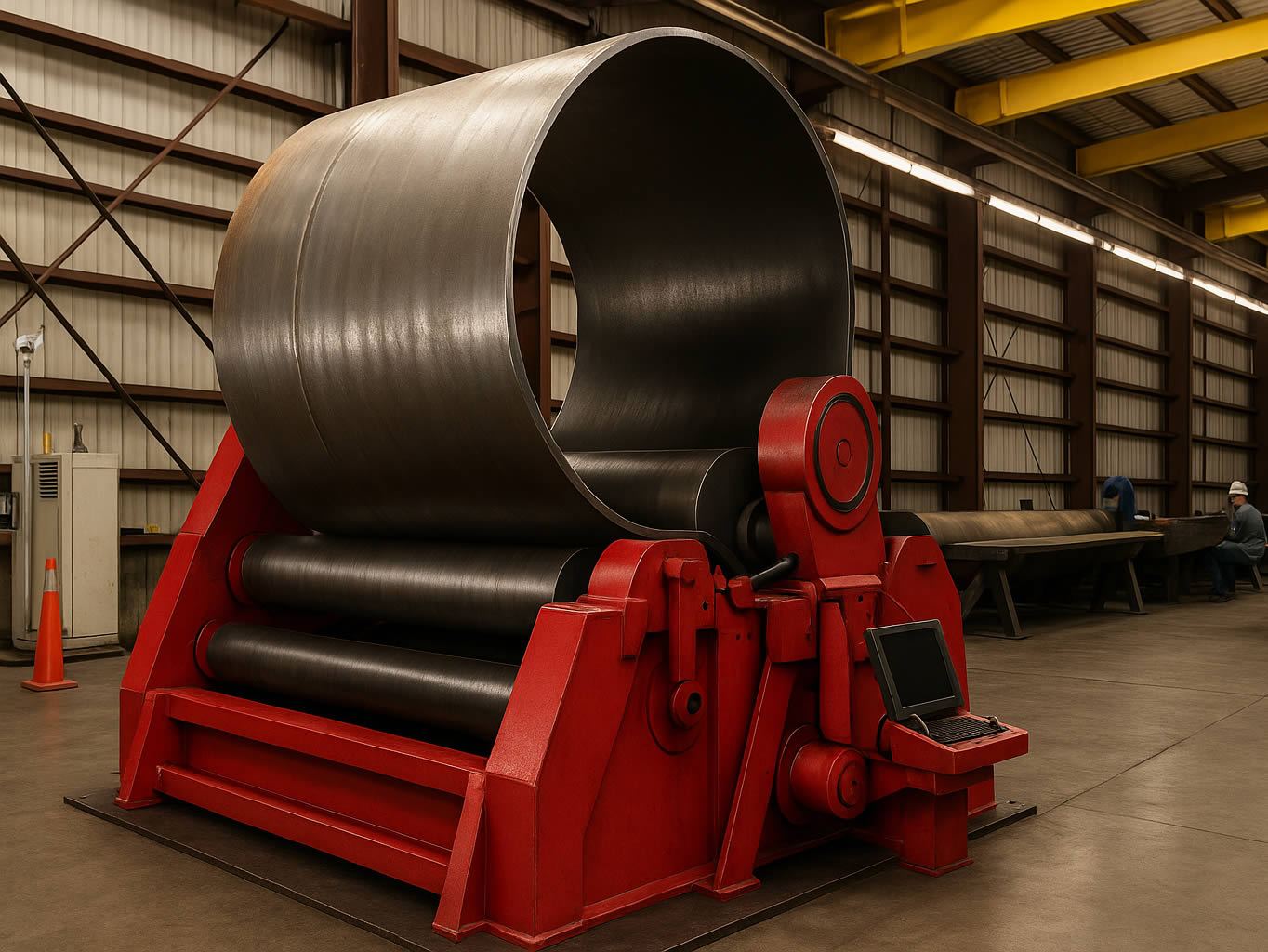
Rolled cylindrical steel tank shell course sitting in the plate roll on the fabrication shop floor
Round · Rolled Shell
Two Shop-Welded Families

Rectangular modules or round shells.

Both are welded, lined, and coated under the same roof, to the same procedures, by the same certified welders. Geometry is what changes — and capacity, footprint, service, and how the tank has to reach your site are what decide it.

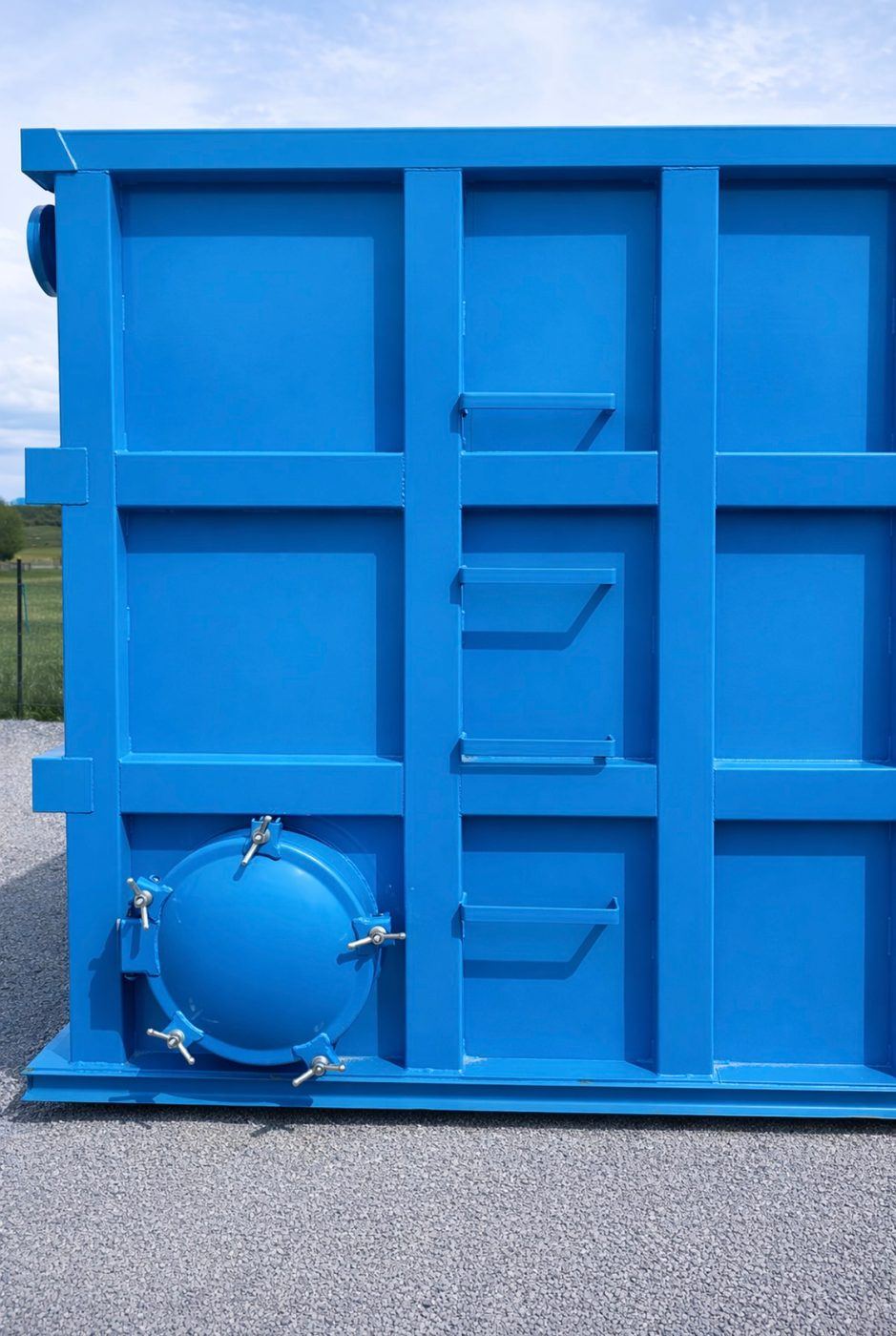
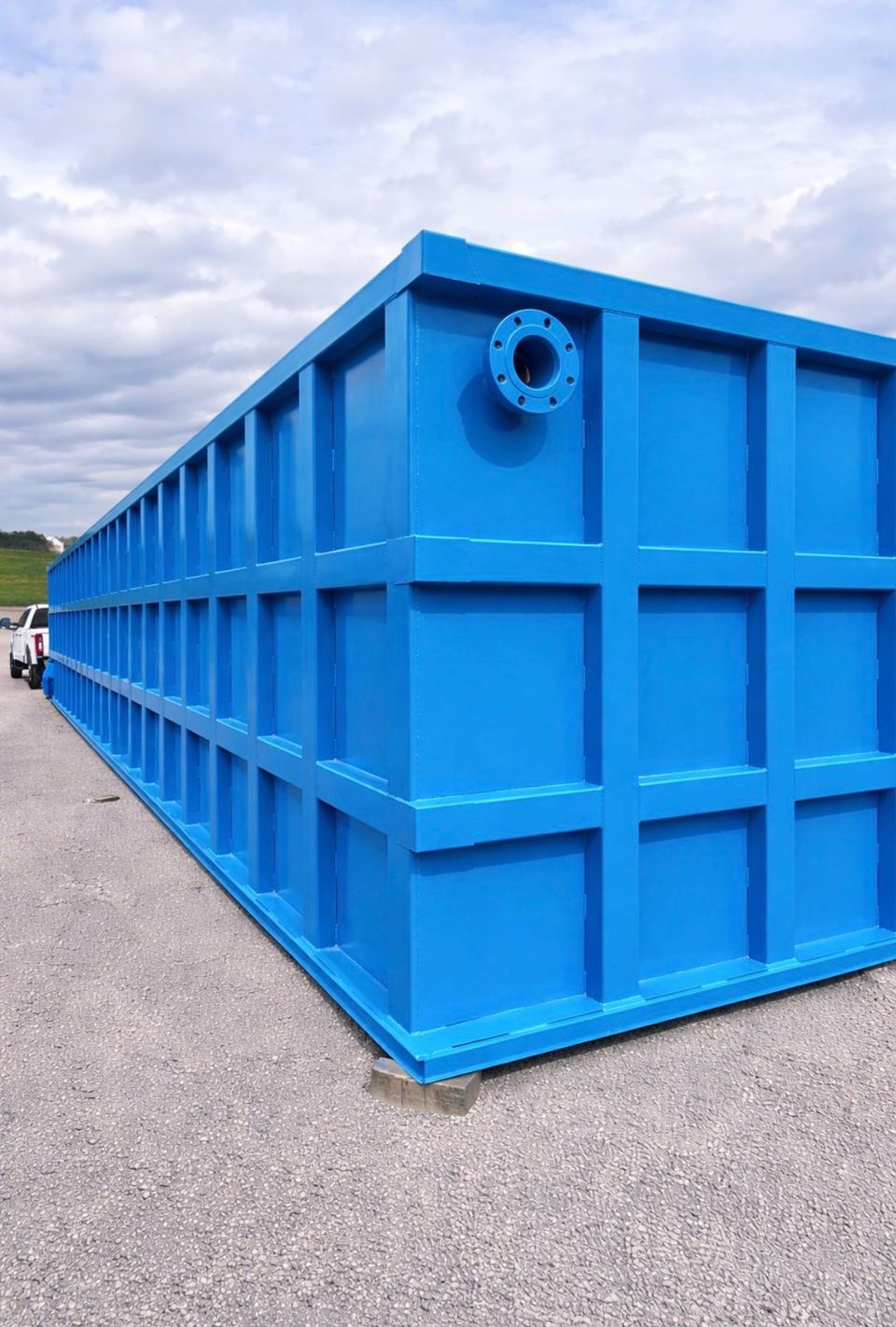
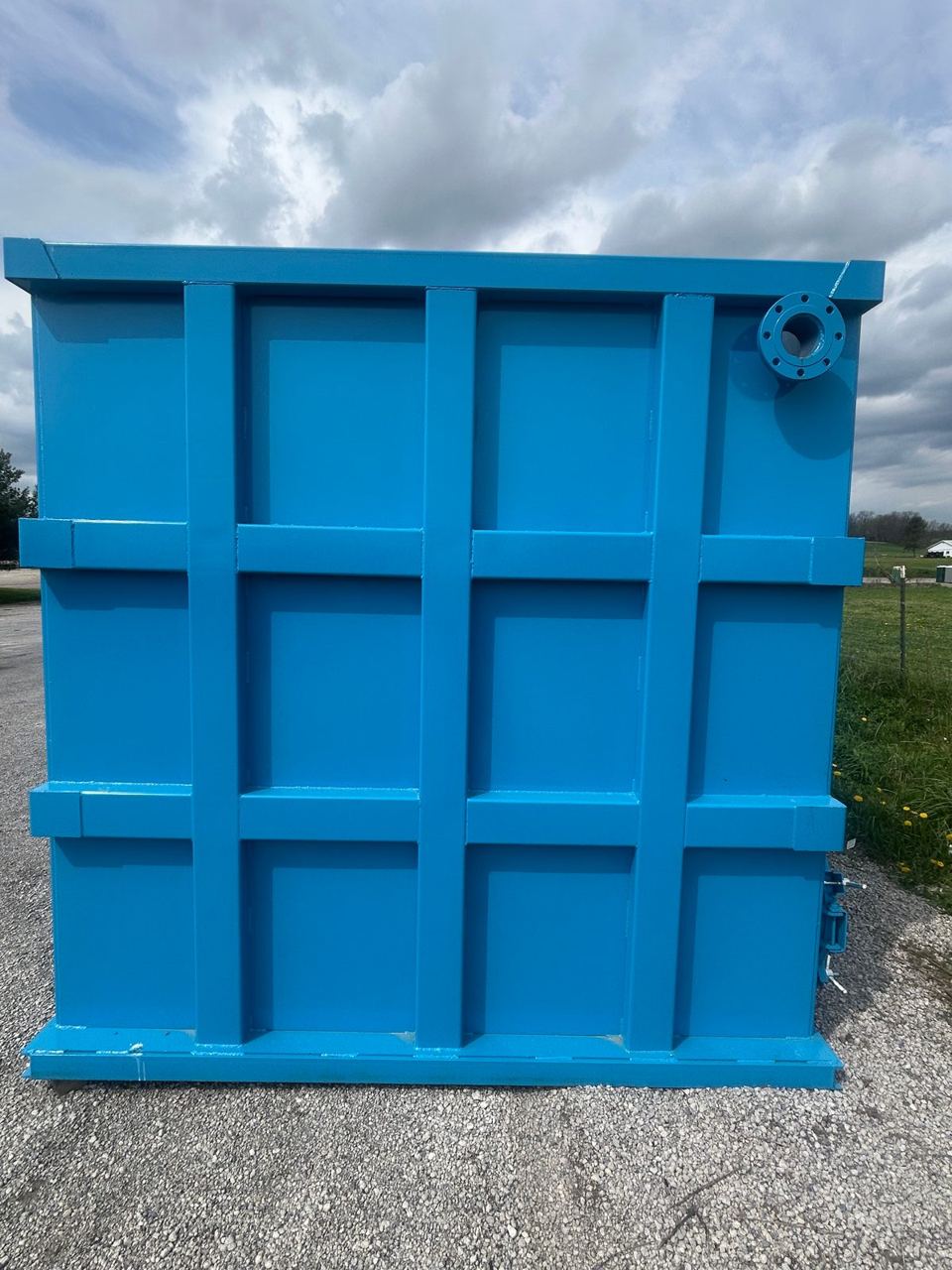
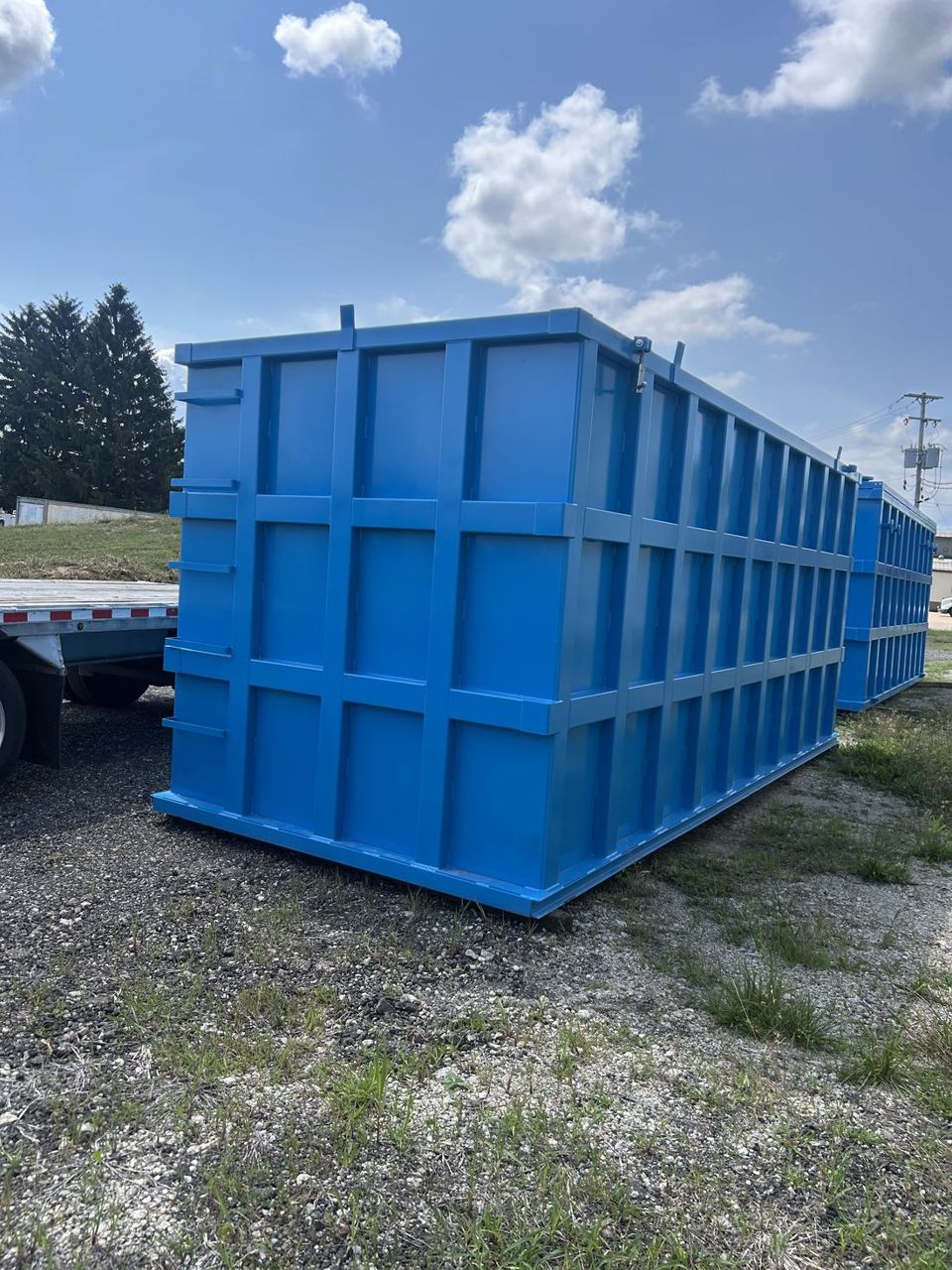
Bright blue shop-welded steel tank staged outdoors on gravel, externally reinforced panel grid facing the camera
Family 01 · Rectangular

Shop-Welded Rectangular Tanks (EnviroBox)

Shop-welded rectangular modules built on a fixed 8′ width, stacked in 8′ sidewall sections and crane-set on site. Field joints are compression-sealed, so there is no field welding and no field-cure coating sitting on the critical path.

Best forRapid and temporary deployments, tight or irregular footprints, plans where a rectangle uses the available slab better than a circle, very large volumes built up from modules, and tanks that may be added to or relocated later.
  • GeometryRectangular · fixed 8′ width
  • Sidewall8′ sections to 32′
  • Field JointCompression-sealed, no weld
  • CodesAWS D1.1 · ISO 9001
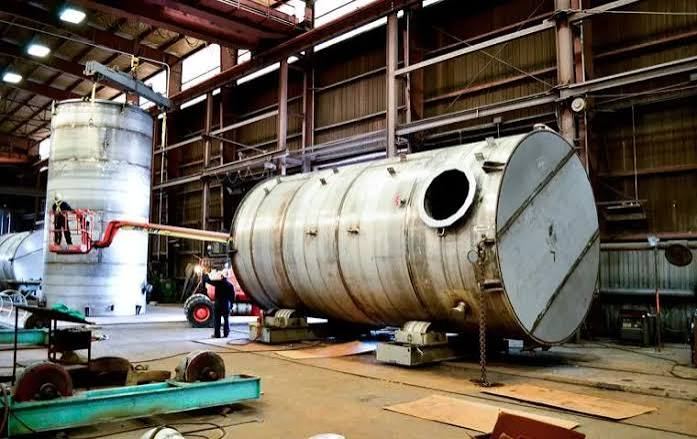
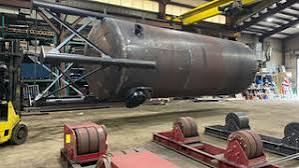
Stainless steel shop-welded round tanks under fabrication — a large horizontal tank on turning rolls with an open manway nozzle, and a vertical tank being lifted by overhead crane behind it
Family 02 · Round Cylindrical

Shop-Welded Round Tanks

The workhorse of bulk liquid storage, and the tank most sites already have. Shell plate is rolled to diameter, seams are welded full penetration and inspected, heads, nozzles, and manways are fitted, then the tank is blasted, lined, coated, and shipped as one finished unit.

Best forChemical feed and bulk chemical storage, potable and fire-protection reserve, sludge and process holding, fuel and lube oil — anywhere a pressure-capable, fully drainable, field-recoatable round shell is the standard answer.
  • GeometryVertical · cone · horizontal
  • Diameter4′–12′ typical
  • Capacity500–50,000 gal typical
  • CodesAPI 650 J · UL 142 · D100
Round Shop-Welded Tanks

Rolled, welded, coated — delivered whole.

A round shop-welded tank leaves the plant finished. Plate is rolled to diameter, longitudinal and circumferential seams are welded full penetration and inspected, heads and appurtenances are fitted, and the interior lining and exterior coating are applied and cured indoors where film thickness and cure are controlled. On site it becomes a set, level, and connect job.

MOST COMMON

Vertical Flat-Bottom

API 650 Annex J · AWWA D100

The default for water, chemical feed, and process storage. Flat shop-welded bottom on a ring wall or slab, with a cone or dome roof, or open top where the process needs access.

  • BottomFlat, shop-welded
  • FoundationRing wall or slab
  • RoofCone, dome, or open
Request a quote →
DRAINABLE

Cone & Sloped Bottom

Skirt or Structural Legs

Where the tank has to empty completely — polymer, slurry, sludge, and bulk chemical service. The bottom sweeps to a center outlet, carried on a welded skirt or structural legs for clearance under the drain.

  • DrainFull sweep to outlet
  • SupportSkirt or legs
  • ServiceSlurry, sludge, polymer
Request a quote →
LOW PROFILE

Horizontal on Saddles

UL 142 · Skid-Ready

For height-restricted rooms, skid packages, and fuel or lube oil service. Dished heads on welded saddles keep the profile low and the tank easy to set, anchor, and pipe.

  • SupportWelded steel saddles
  • HeadsDished or flanged
  • UseSkid, indoor, fuel
Request a quote →
The Envelope

How big, and to which code.

Fabrication is rarely the constraint on a shop-welded round tank — the highway is. Everything below is a typical starting envelope; the governing code and the real limits get confirmed against your service, loads, and delivery route before anything is cut.

Typical ranges for tanks shipped complete by highway. Larger diameters and capacities are available with a route study, or by moving to a field-erected bolted or welded tank — we tell you where that crossover lands for your project.
Diameter4′ to 12′ on standard permits; to 20′ shop-assembled under API 650 Annex J with a route study
CapacityRoughly 500 to 50,000 gallons as a single delivered shell
Shell & headsRolled plate with full-penetration, inspected seams; flat, dished, or coned heads; open top available
MaterialsCarbon steel, 304 or 316L stainless; shop-applied epoxy lining with epoxy or urethane exterior
OrientationVertical flat-bottom, vertical cone or sloped bottom on skirt or legs, horizontal on welded saddles
Shop-fittedFlanged nozzles, manways, lifting lugs, saddles or legs, ladders, handrail, level and gauge connections
Code basisAPI 650 Annex J, UL 142, AWWA D100, ASME Section VIII Div. 1 when pressure-rated, NSF/ANSI 61 linings for potable contact
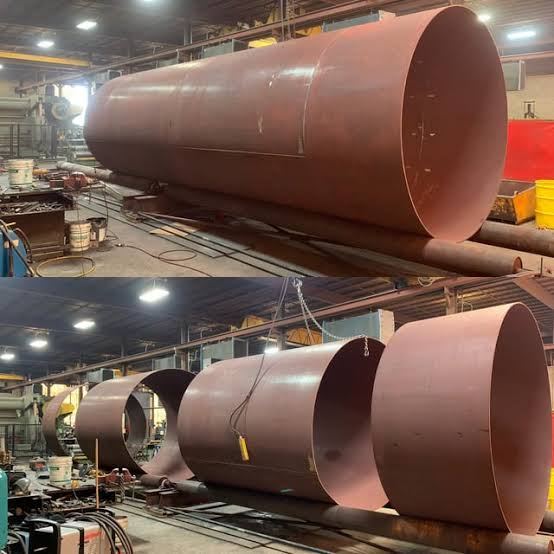
Primer-coated carbon steel round tank lying in the fabrication shop with its open end toward the camera, above a row of rolled shell courses staged for seam welding
Where They Go

Common round tank service.

Chemical feed & day tanks Bulk chemical storage Potable water Fire-protection reserve Sludge & process holding Fuel & lube oil (UL 142) Brine & leachate Food & beverage process Agricultural & dairy Data center cooling makeup
How Shop-Welding Works

Controlled shop. Compressed field.

Welding, coating, and QA happen in the plant under automated lines and certified procedures. Rectangular modules ship to site and are field-set and compression-sealed, with no field welding — less weather risk, less rework, faster commissioning. Where a round shell suits the service better, the same shop builds that instead.

FABRICATION

Shop-Welded Construction

AWS D1.1 · Automated Lines

Full-penetration welds laid under controlled conditions with consistent heat input and inspection — not field-improvised in wind and rain.

  • WeldingAWS D1.1 certified
  • QAISO 9001 documented
  • CoatingShop-applied lines
Configure & price →
DEPLOYMENT

Rapid Field Assembly

Crane-Set · No Field Weld

Modules arrive ready to set. Field crews assemble and seal rather than fabricate, cutting weeks off the schedule and reducing site labor exposure.

  • ScheduleCompressed vs. field-built
  • Site LaborReduced footprint
  • RiskLower weather exposure
Configure & price →
FIT

Application-Matched

Water / Wastewater / Industrial

Sized and specified for the service — potable, equalization, process, or industrial — with the same technical spec review applied to every order.

  • ServiceWater / WW / Industrial
  • ReviewTechnical spec check
  • SupportLifecycle inspection
Configure & price →
Service Fit

Shop-coated, or stainless.

A shop-welded round or rectangular shell is specified the same way as a field-erected one: the water decides whether it leaves the shop lined or leaves it stainless. Each tag links to the service condition behind it.

Epoxy-lined carbon steel shellEnvelope & DFT →

A shop-applied lining is the best-controlled lining you can buy — blast profile, DFT and holiday testing all happen under a roof — but it does not change the chemistry limits of the generic system. Above about 120 °F a standard epoxy is out regardless of how well it went on.

Stainless steel shell (304 / 316L)Envelope & DFT →

Stainless removes the coating from the equation, not the corrosion. Chloride above roughly 1,000 mg/L pits 316L at neutral pH, so brine and concentrate services move to FRP, vinyl ester or a duplex alloy.

Fifty-two service conditions with the recognition cues, the attack mechanism and the ranked alternatives: open the lining selection matrix →

Selection

Which one fits your project?

Most projects sort themselves out on three questions: how much volume, how it has to arrive, and whether the tank will change over its life. Bolted field-erected tanks are the third option once you outgrow what a shop can ship.

A starting comparison, not a rule. Service chemistry, loads, code basis, and site access can override any row — which is why every inquiry gets a technical spec review before we quote.
 Shop-Welded RectangularShop-Welded RoundBolted Field-Erected
GeometryRectangular on a fixed 8′ widthCylindrical — vertical, cone-bottom, or horizontalCylindrical, field-assembled panels
Typical capacityA few thousand gallons to 500,000+, set by length500 to 50,000 gallons per delivered shell5,000 gallons to 5 million
How it arrivesShop-welded modules on flatbedsOne finished, coated tankFlat panel kit with fasteners and sealant
Field workCrane-set and compression-seal — no field weldingSet, level, anchor, and connectPanel erection and seam sealing
FoundationLevel slab or pier supportsRing wall or slab; piers or saddle supports if horizontalEngineered ring wall or slab
Future changeModules can be added or relocatedPermanent single shell; small sizes stay relocatableExpandable by adding rings or panels
Leans towardSpeed, tight footprints, temporary dutyBulk liquid, chemical feed, full drainage, pressure ratingsLarge permanent volume and future expansion
Explore bolted field-erected tanks →
Why Shop-Welded

Speed without cutting corners.

Shop delivery — rectangular or round — is about moving fabrication risk off the jobsite and into a controlled plant, where welds are inspected, coatings cure properly, and QA is documented before anything ships.

  • Documented QA/QC
    Every weld and coating step recorded in the shop, so what arrives on site is already proven.
  • Weather-Independent Quality
    Critical fabrication never depends on a clear-sky day at the jobsite.
  • Technical Spec Review
    Service chemistry, loads, and codes validated before a single module is cut.
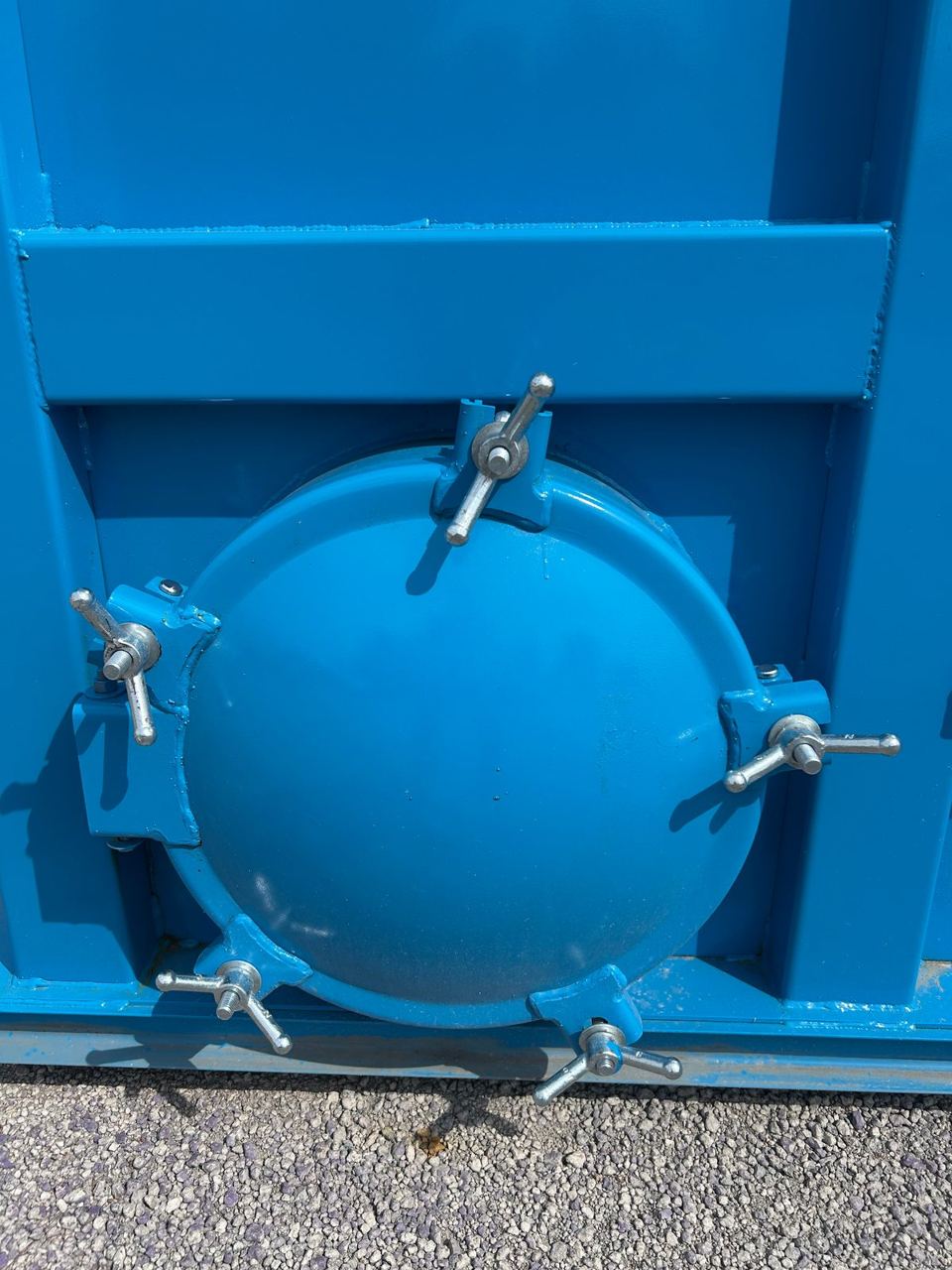
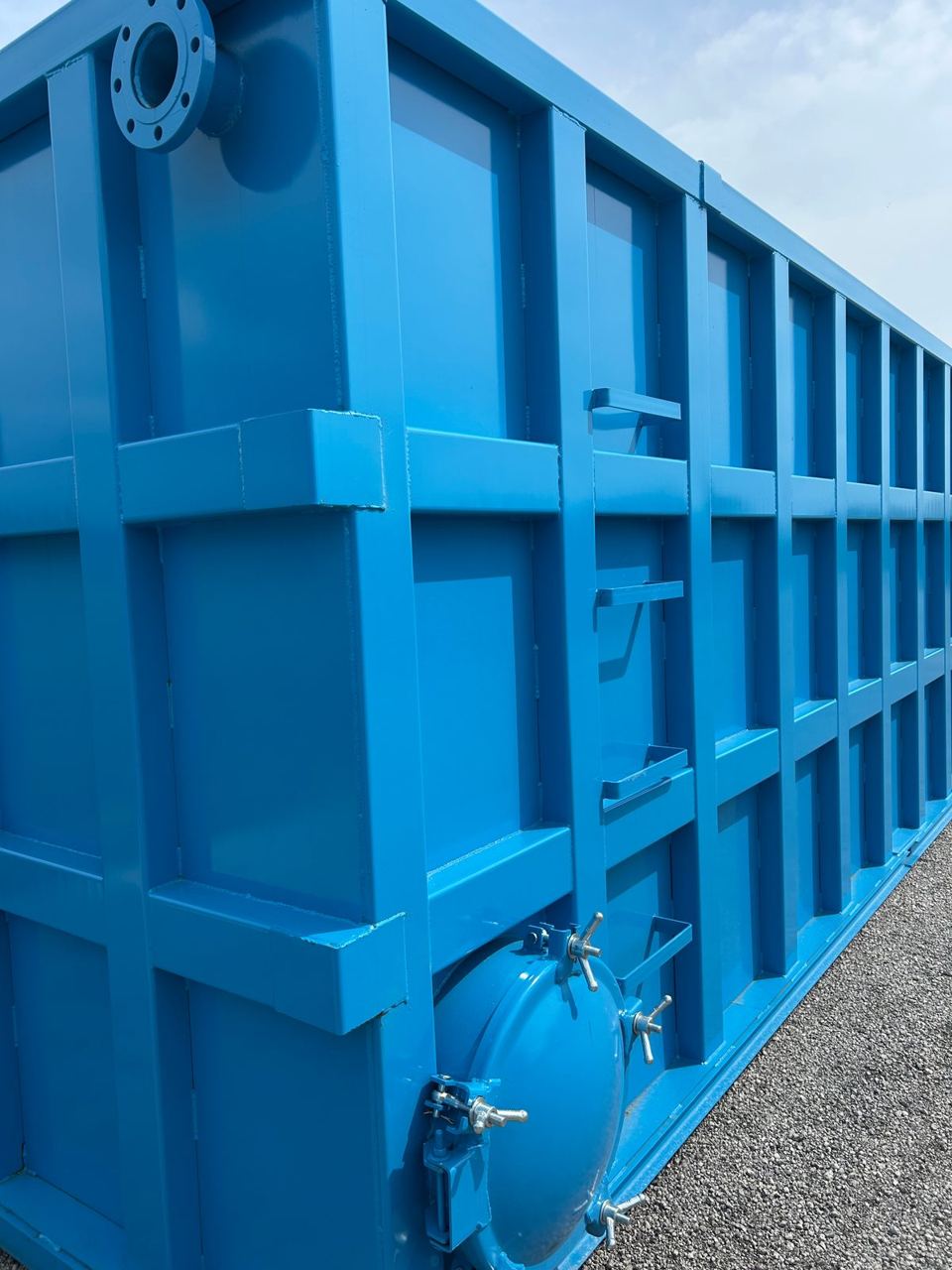
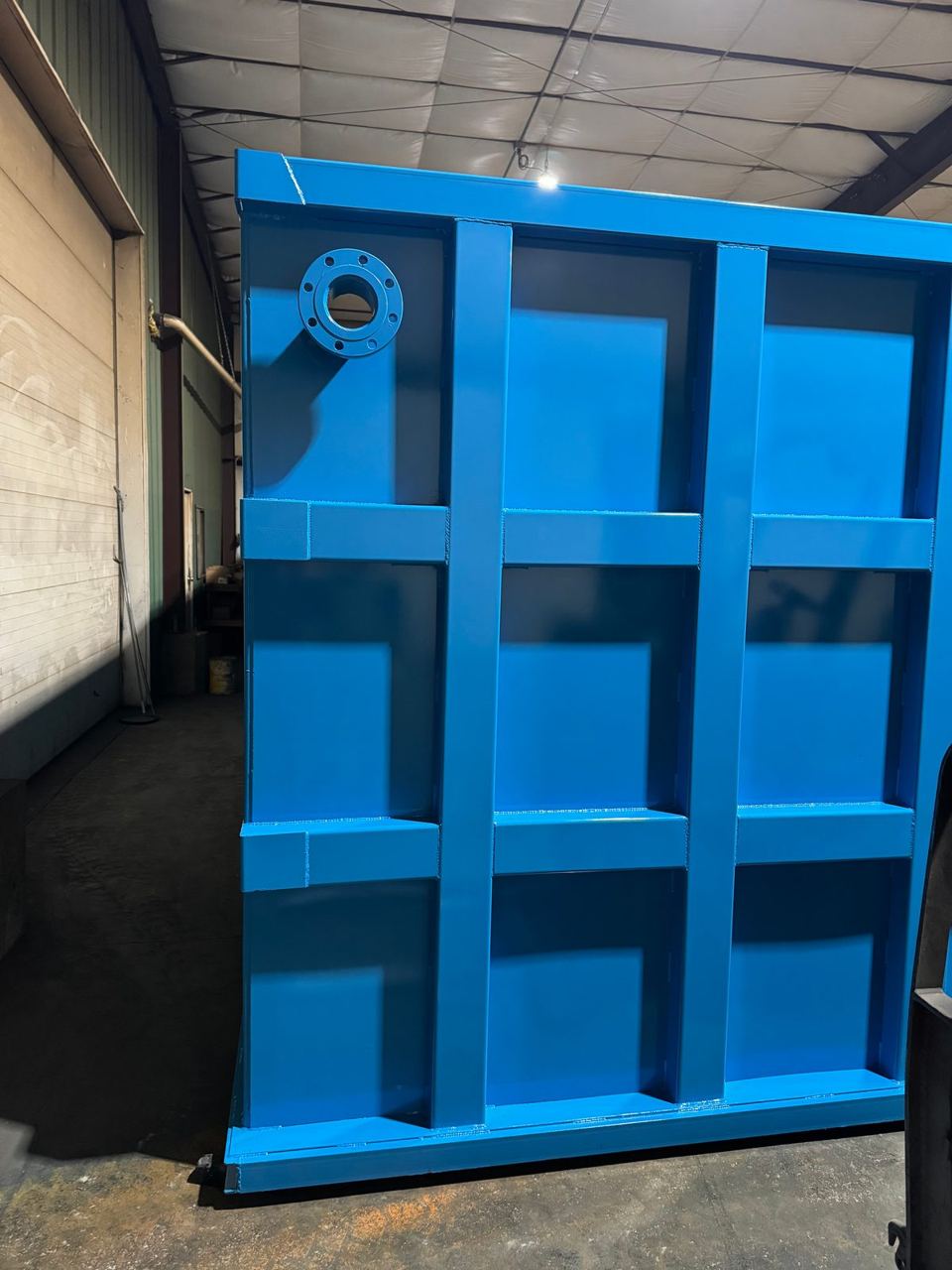
Close-up of a shop-welded steel tank end wall showing the reinforced panel grid and a bolted circular manway
Field-Proven

Fabricated. Coated. Ready to ship.

Round tanks on the turning rolls and rectangular tanks completed in our shop, staged for delivery to municipal and industrial sites nationwide.

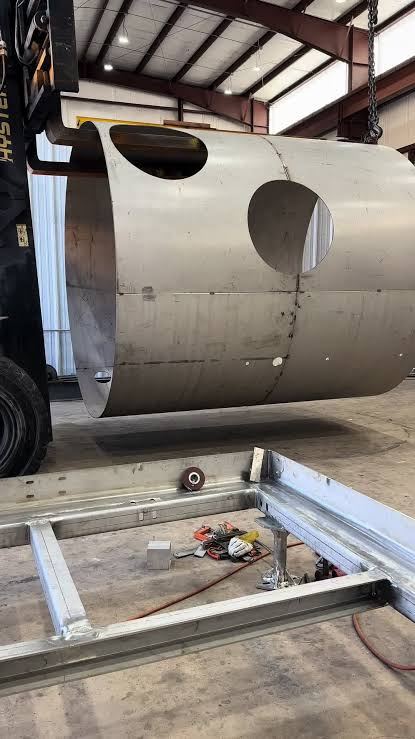
Stainless steel round tank shell section with circular nozzle cutouts, held on a forklift boom above its steel base frame on the shop floor
Cone-bottom shop-welded round steel tank supported on turning rolls inside the fabrication shop
Finished shop-welded round steel tank strapped to a flatbed trailer outside the fabrication shop, ready to ship complete
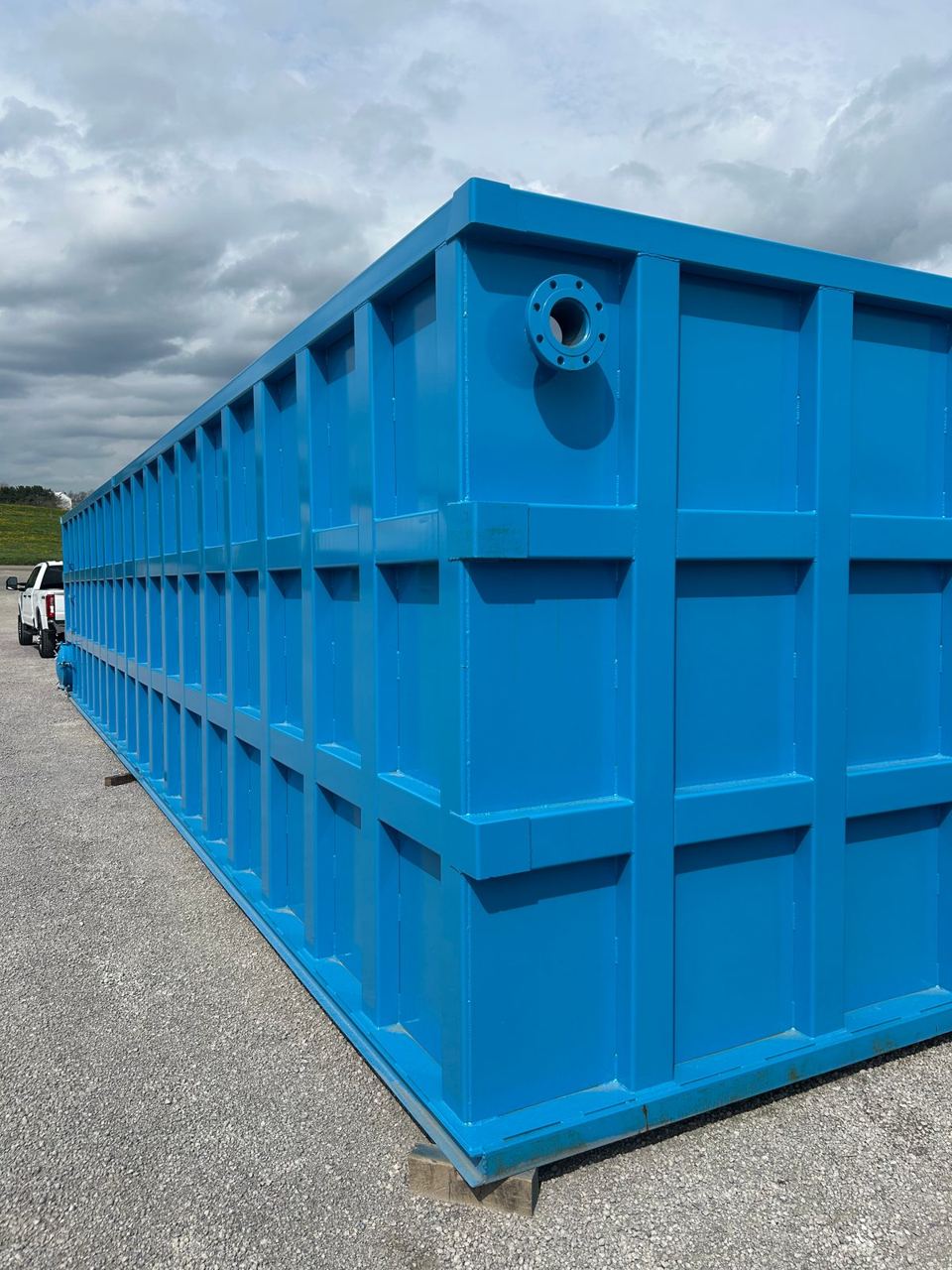
Long blue shop-welded steel tank staged outdoors in the yard, top-corner flanged nozzle and reinforced panel grid receding to the horizon
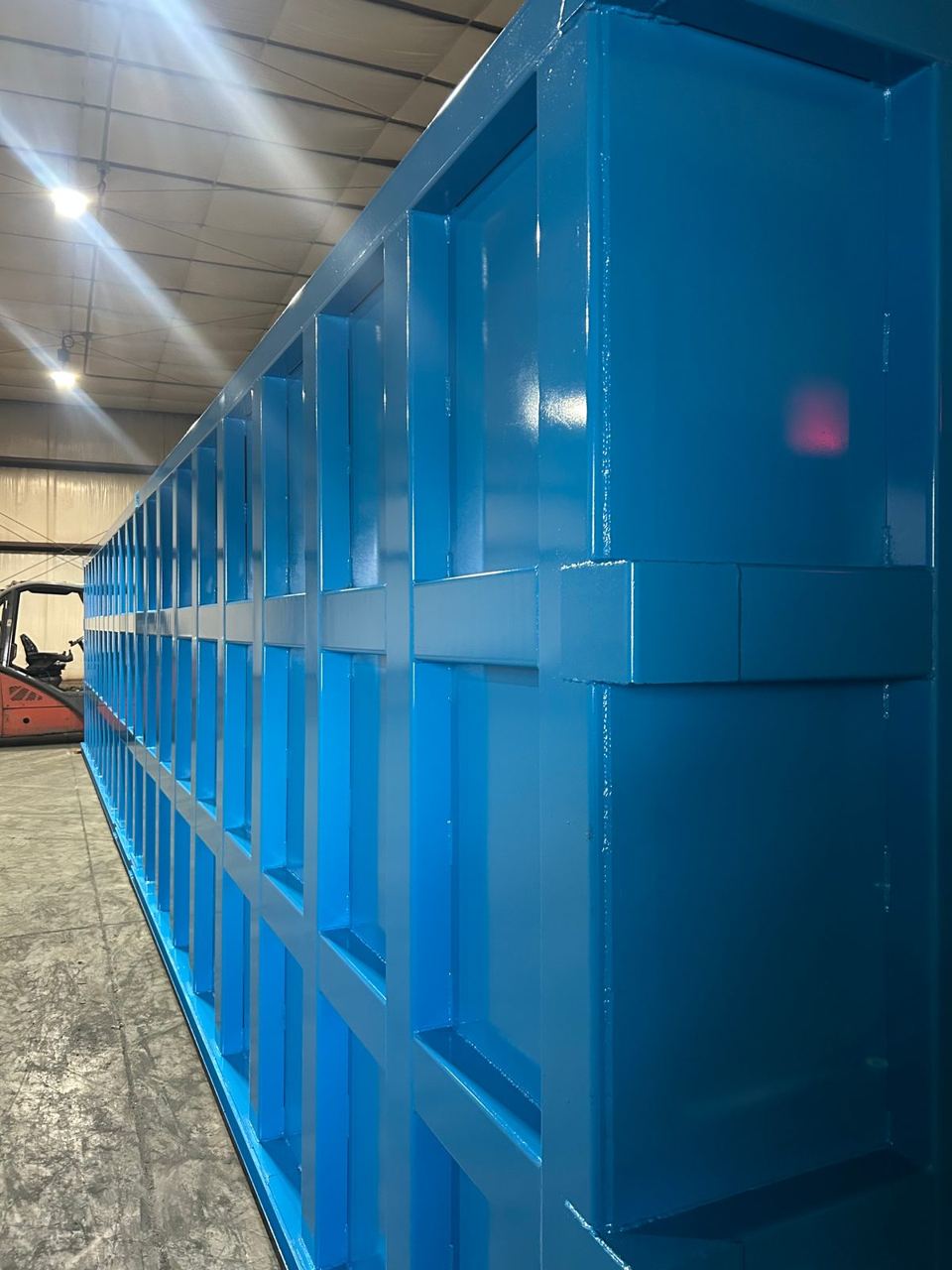
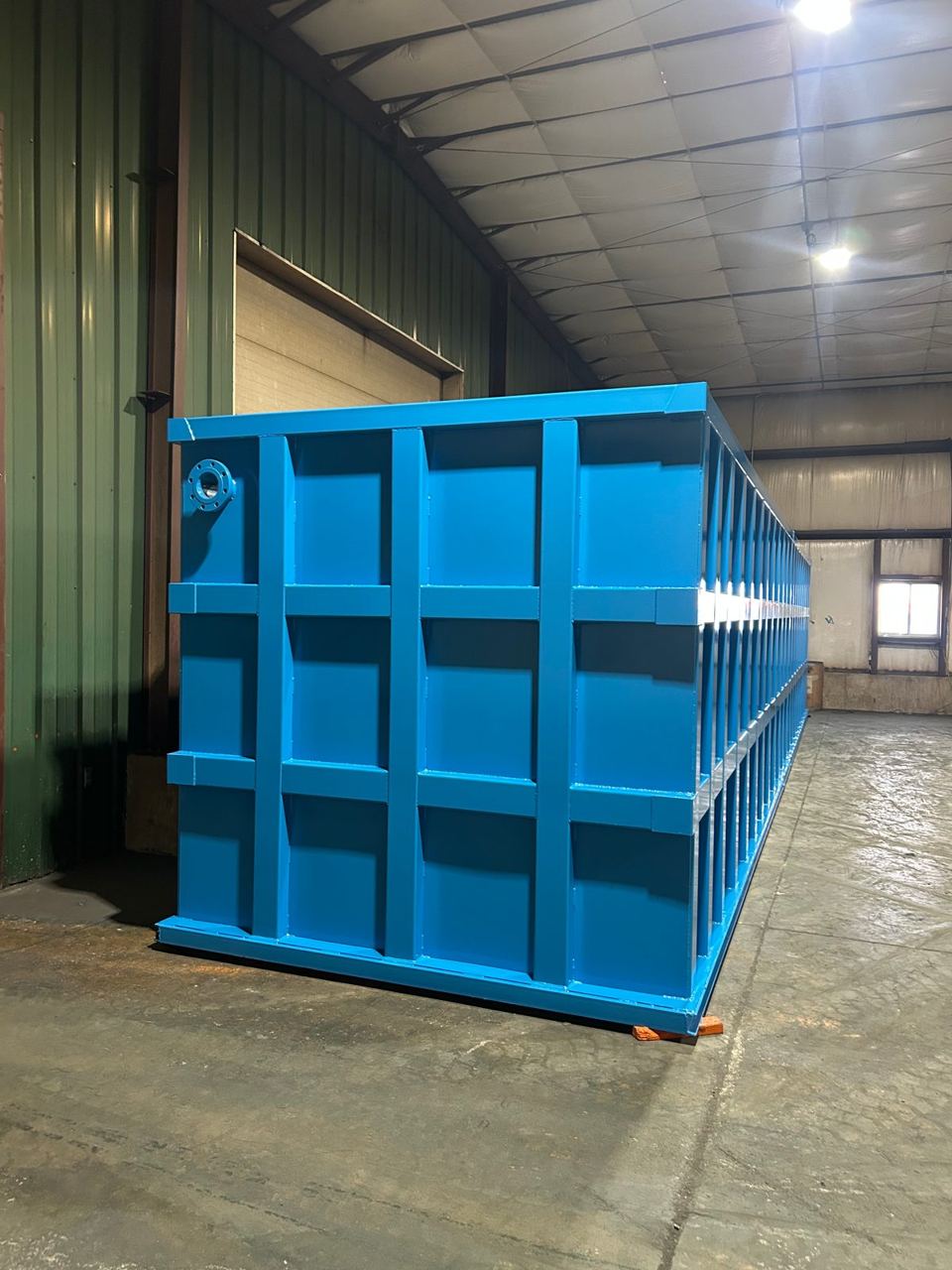
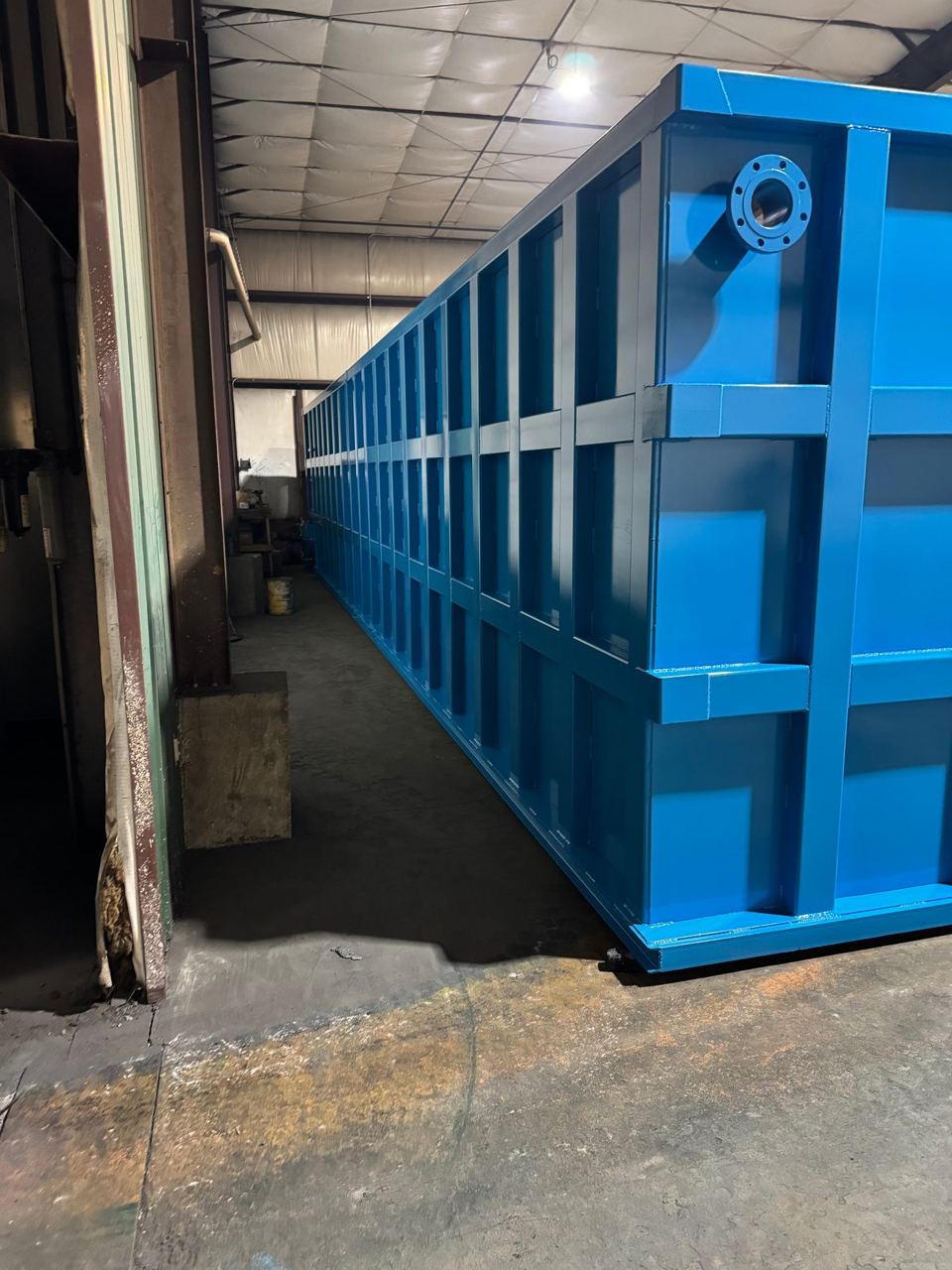
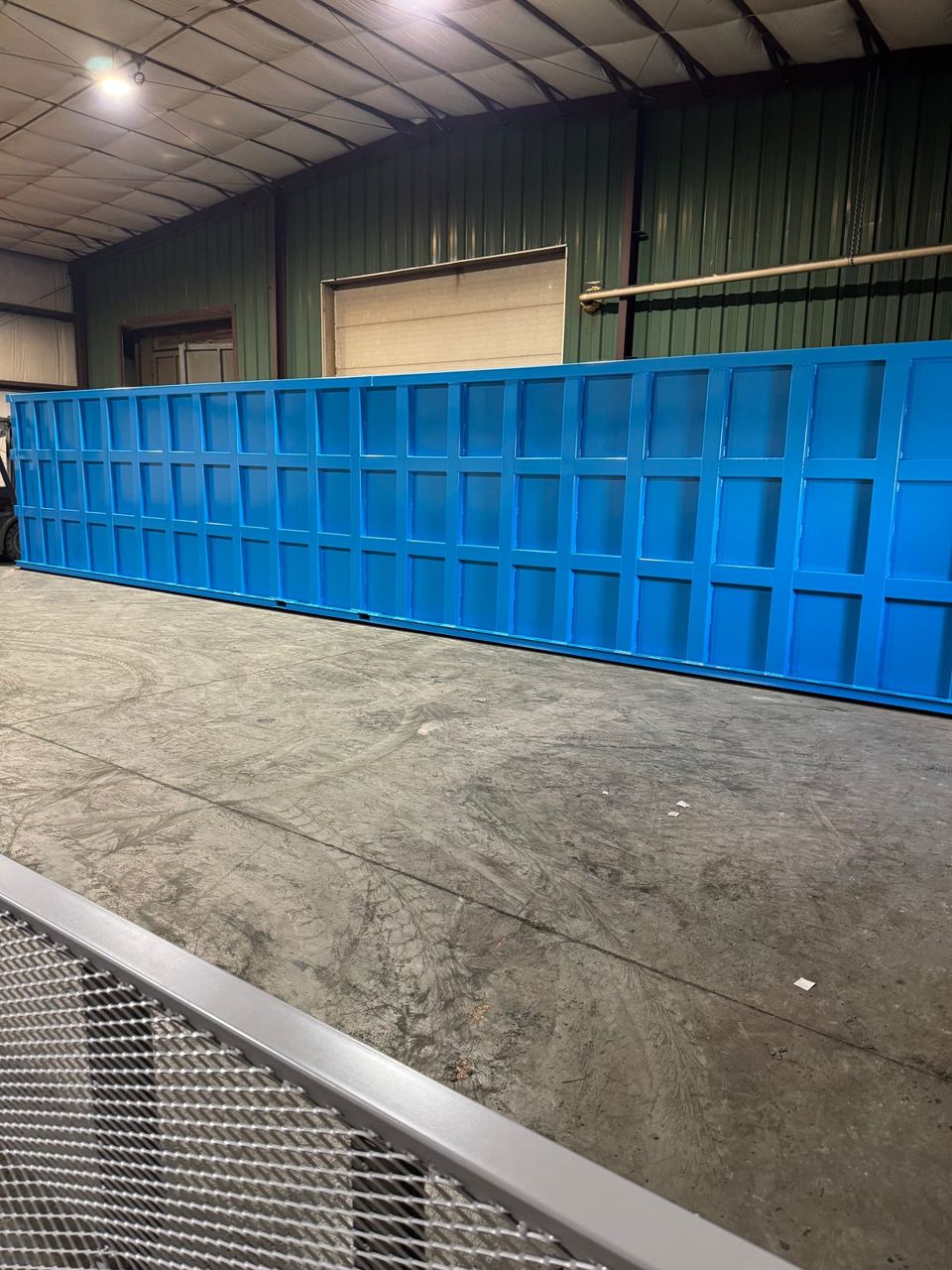
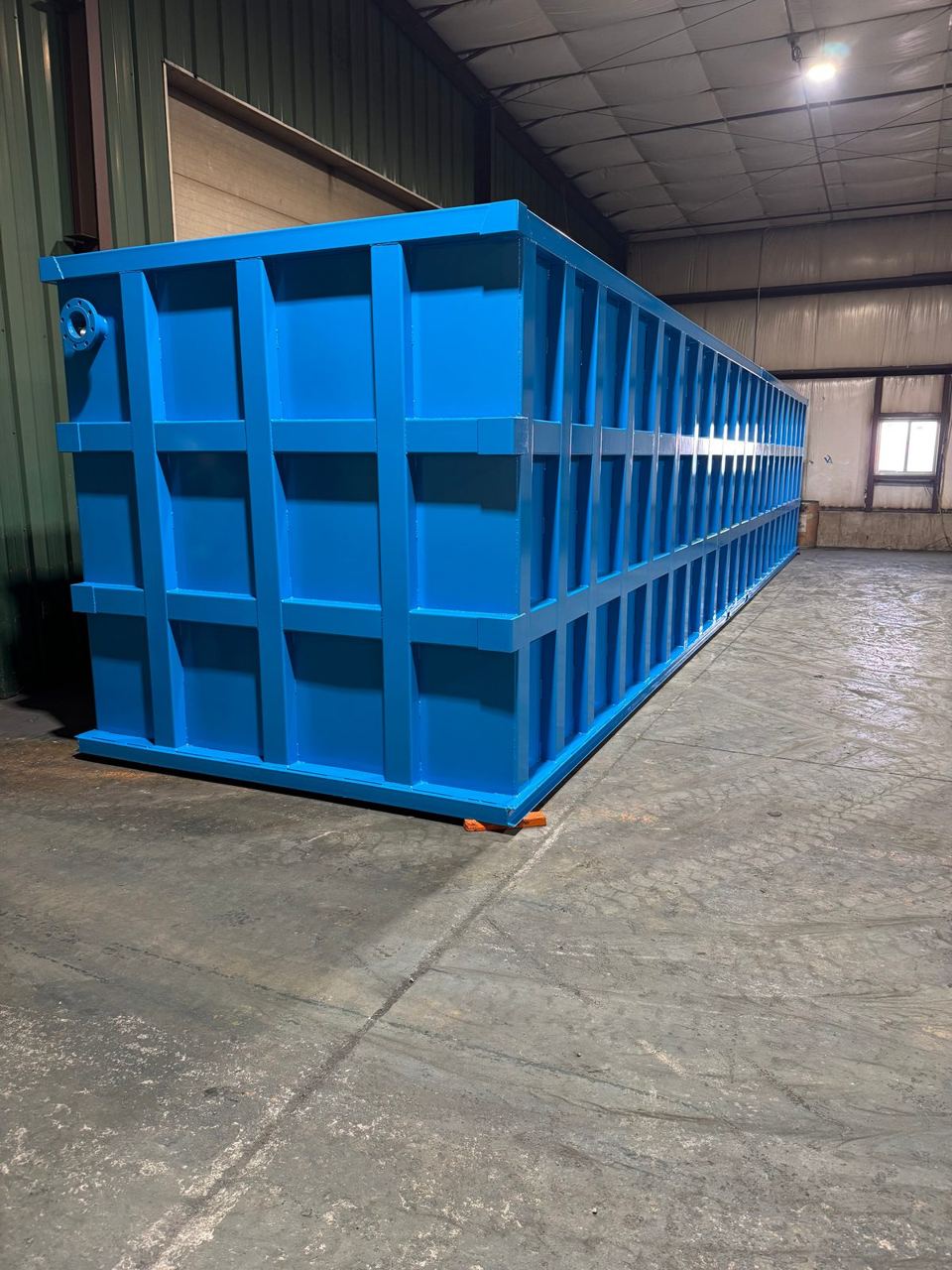
Freshly coated blue shop-welded steel tank running the length of the fabrication shop, glossy panels reflecting the overhead lights
End wall of a finished blue shop-welded steel tank with its reinforced panel grid and a corner flanged nozzle, outdoors under a cloudy sky
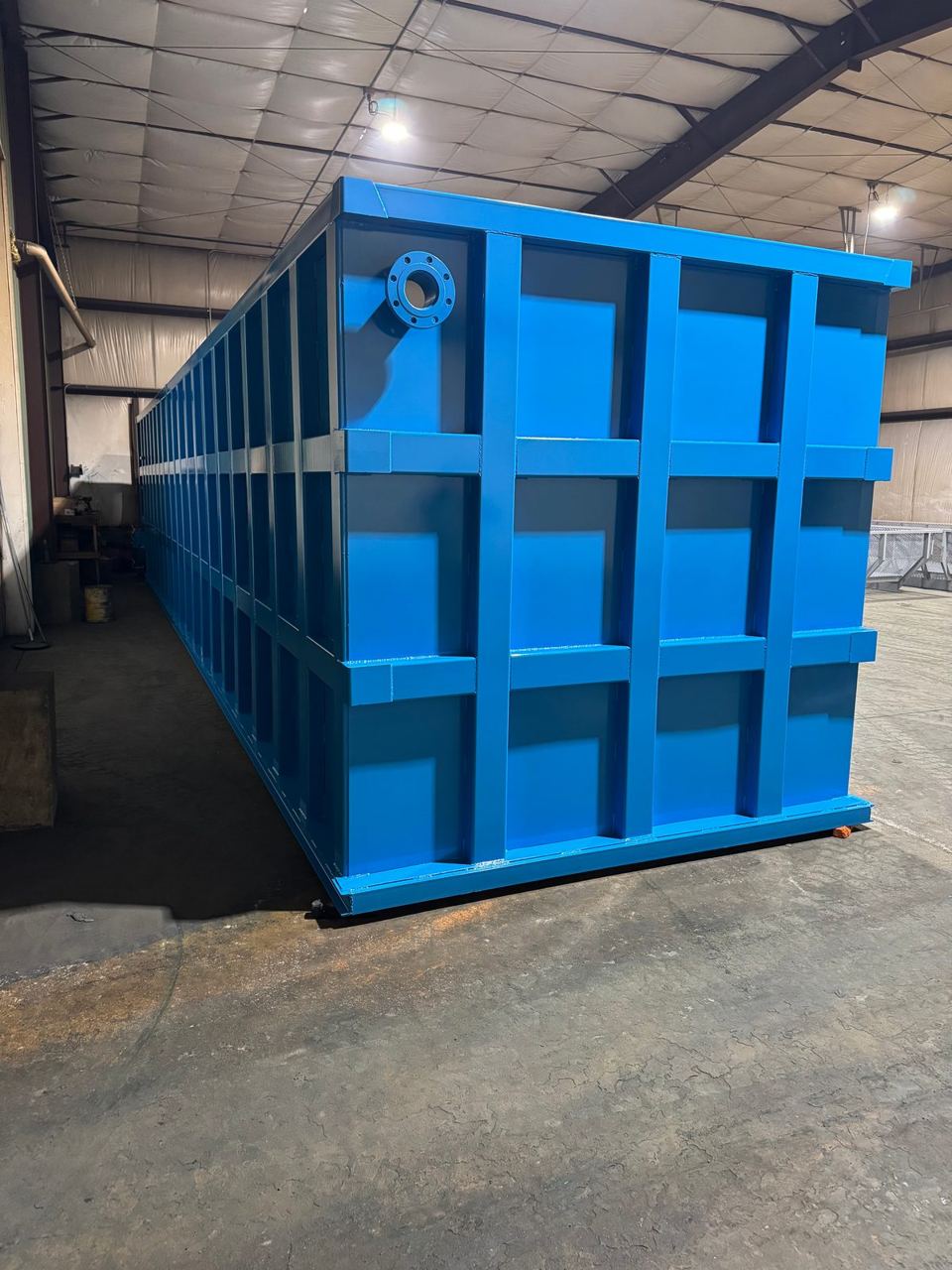
Three-quarter view of a long blue shop-welded steel tank inside the shop, lifting lug on the near corner
Close-up of a bolted circular manway cover secured with wing-nut clamps on a bright blue shop-welded steel tank in sunlight
Long blue shop-welded steel tank in the shop with a top-corner flanged nozzle and the reinforced panel grid running its full length
Large blue shop-welded steel tank staged outdoors with a pickup truck alongside for scale, top nozzle and bolted panel seams
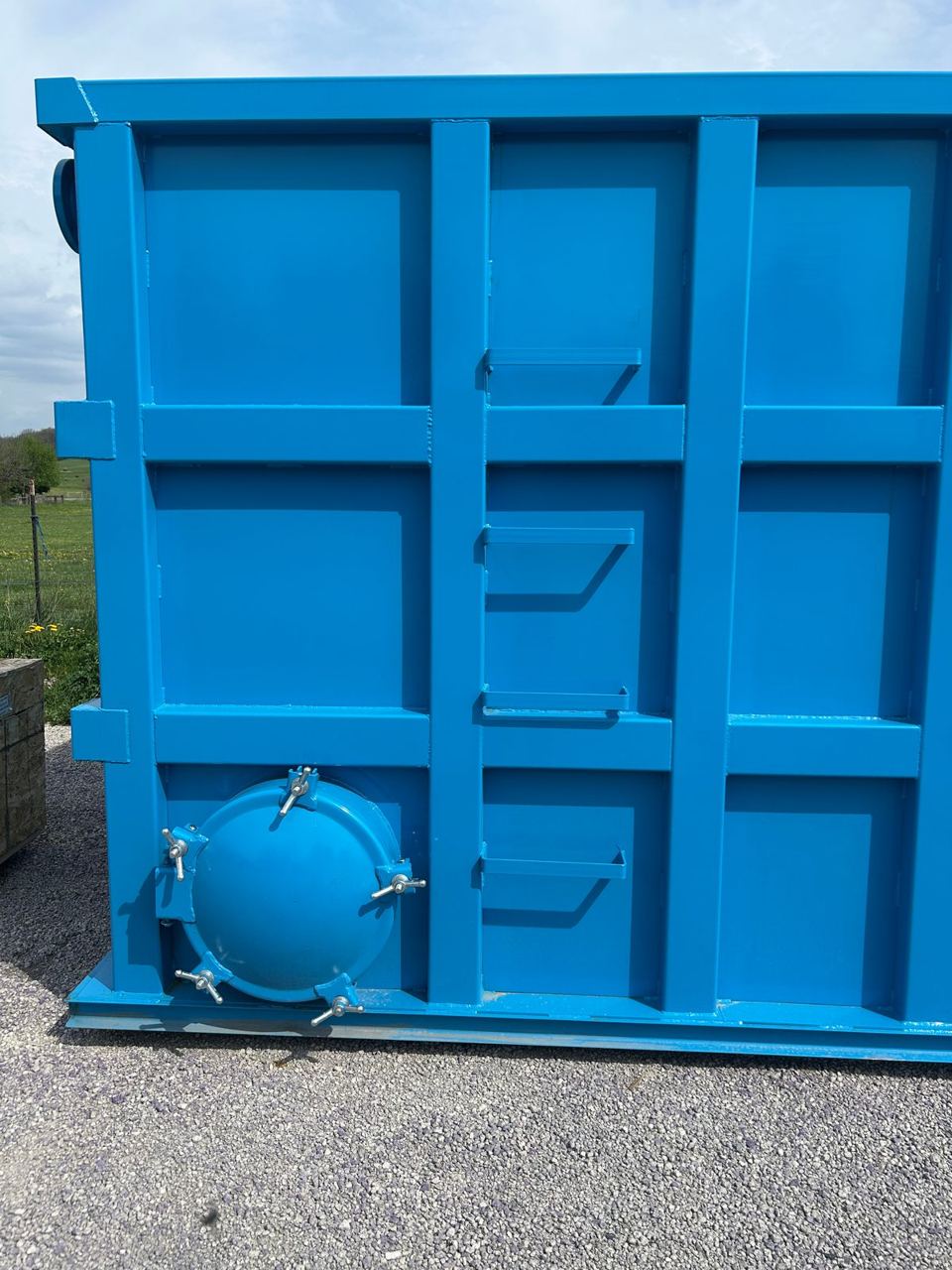
End wall of a blue shop-welded steel tank with a bolted manway and welded step brackets for access, staged outdoors
Tall blue shop-welded steel tank end section with a flanged nozzle and three-by-three reinforced panel grid inside the fabrication shop
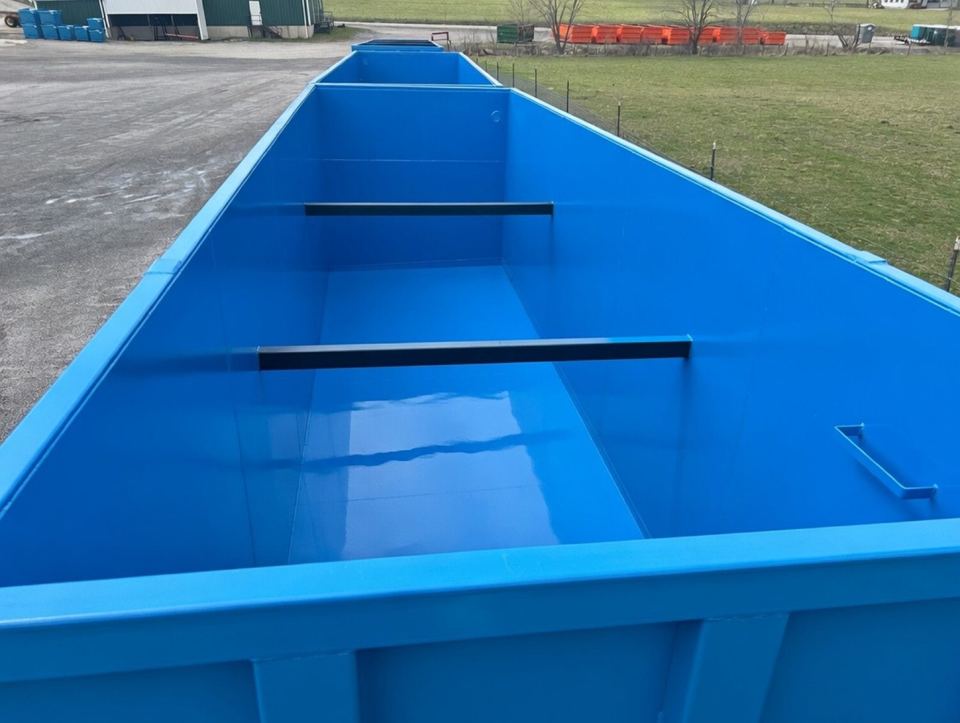
Looking down into the coated interior of an open-top blue shop-welded steel tank with internal baffle bars, staged outdoors
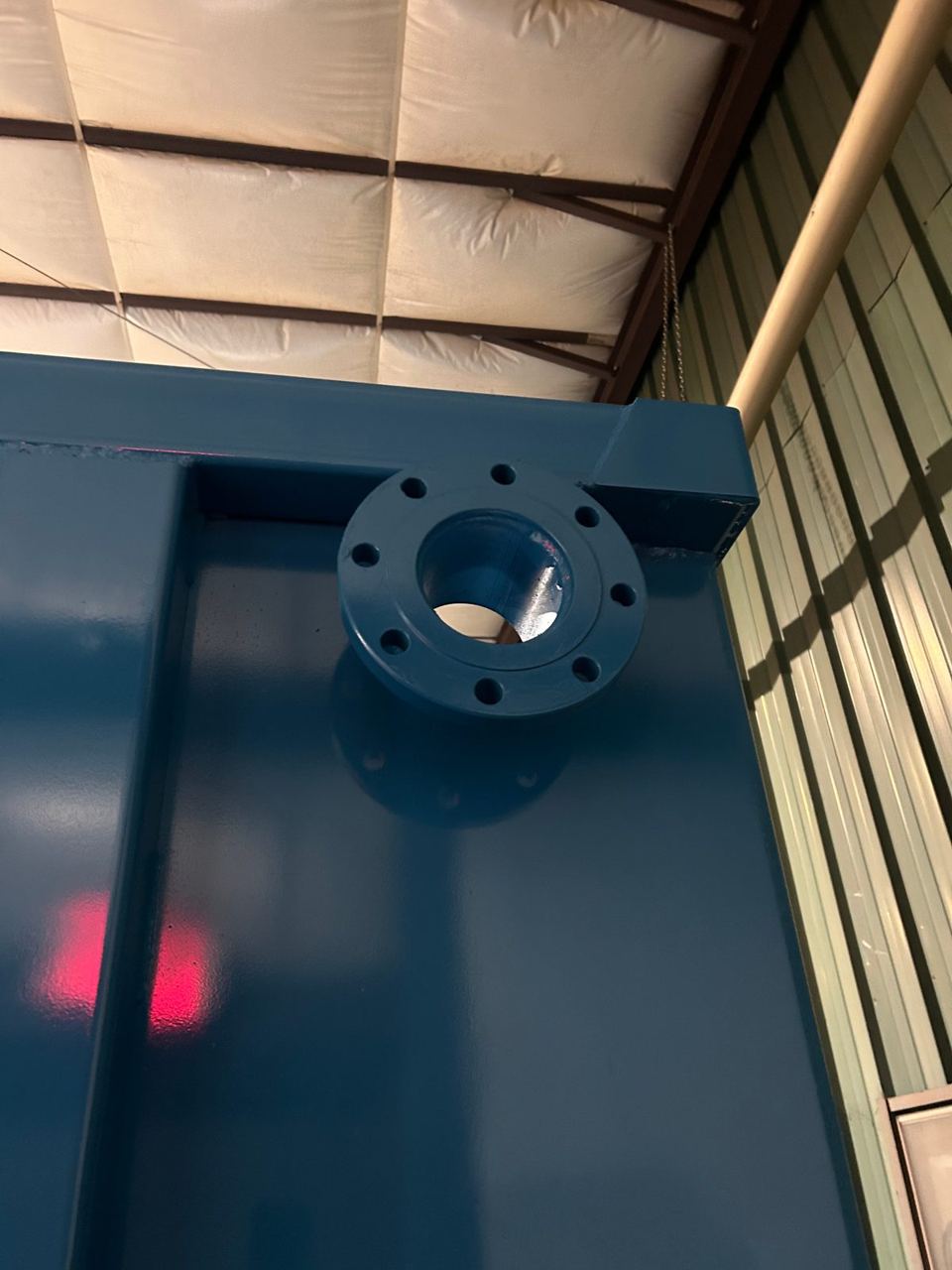
Detail of a bolt-pattern flanged nozzle welded to the top corner of a dark blue shop-welded steel tank in the shop
Long side of a blue shop-welded steel tank outdoors showing the reinforced panel grid, top nozzle, and a side-mounted bolted manway
Blue shop-welded steel tank running down a narrow shop aisle, top-corner flanged nozzle in the foreground
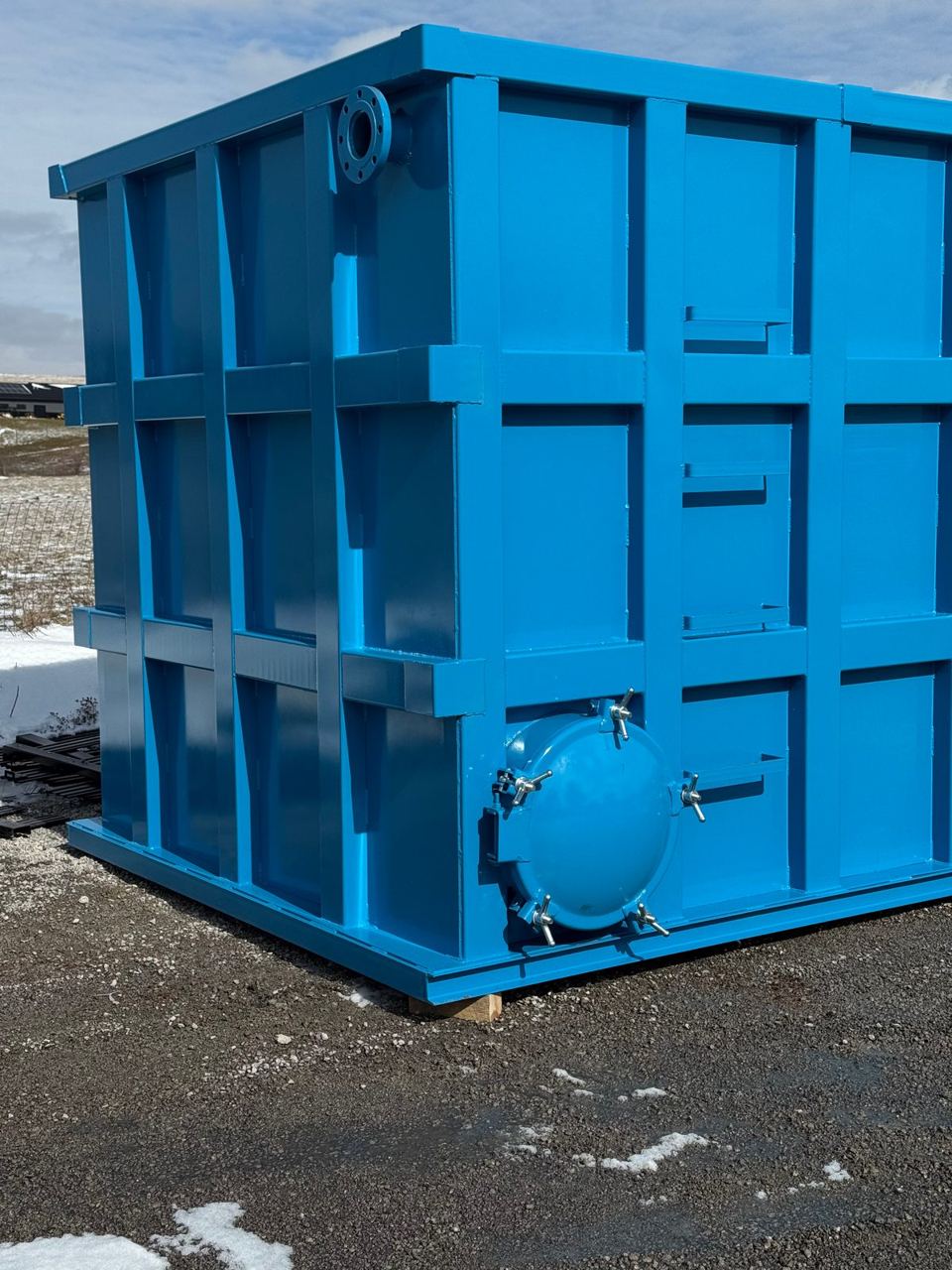
Corner of a blue shop-welded steel tank with a bolted, gasketed manway and wing-nut clamps, staged on a winter lot
Long low blue shop-welded steel tank in the shop, its full reinforced panel wall facing the camera
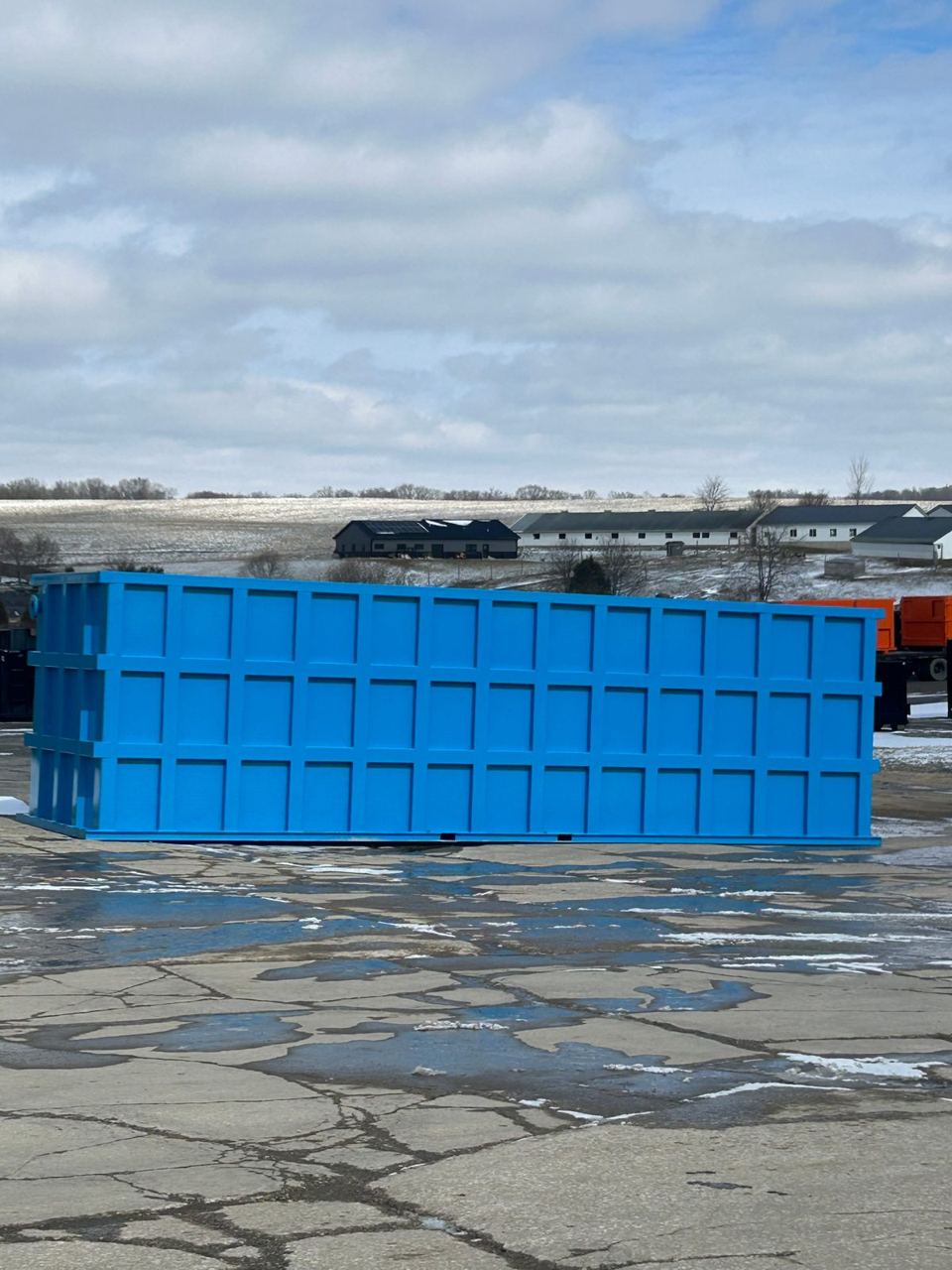
Blue shop-welded steel tank staged on a snow-dusted yard with farm buildings on the horizon
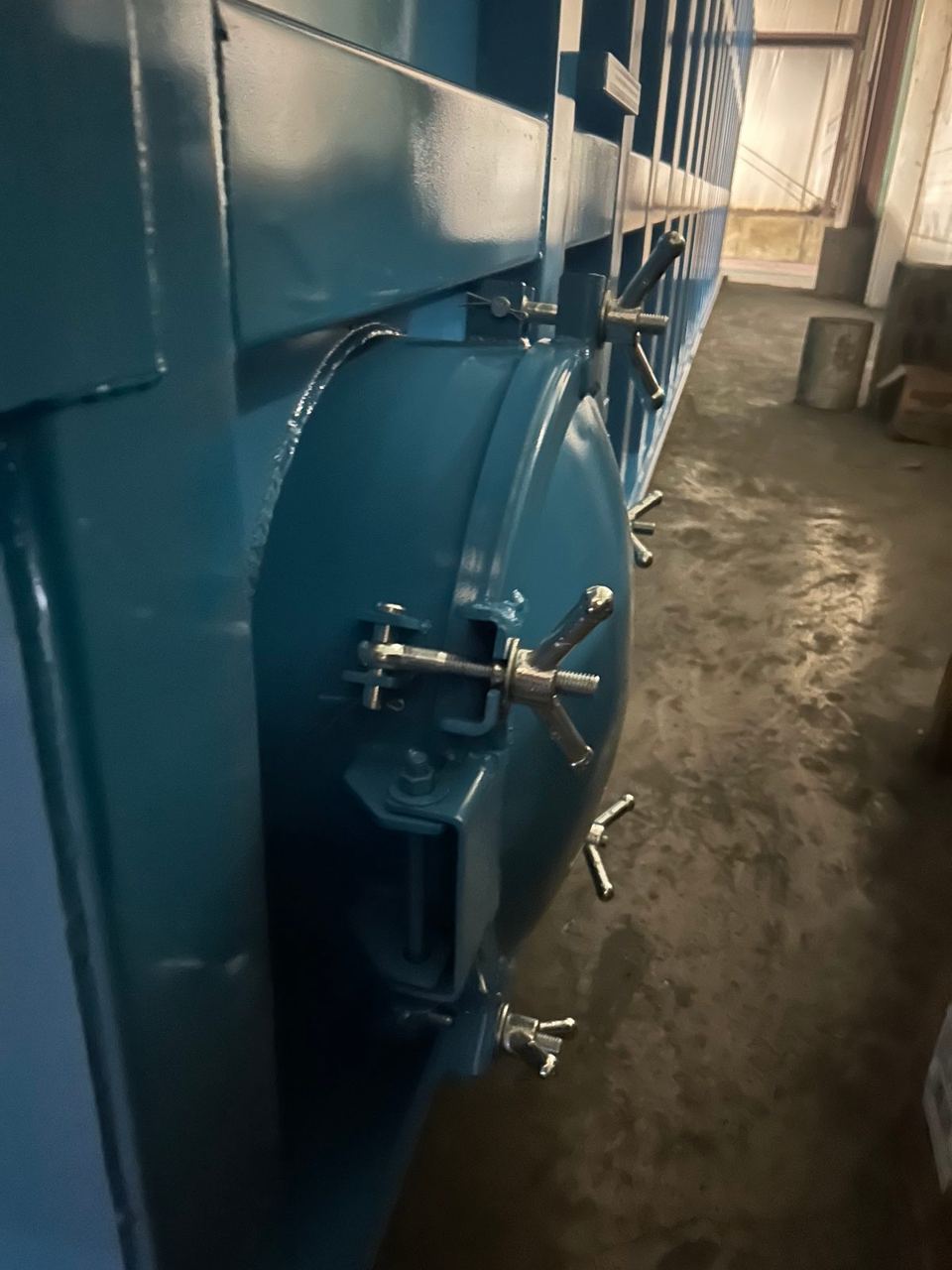
Close-up of a side-mounted bolted manway with swing-bolt wing-nut clamps on a blue shop-welded steel tank in the shop
Three-quarter view of a long blue shop-welded steel tank in the shop with a welded lifting lug at the corner
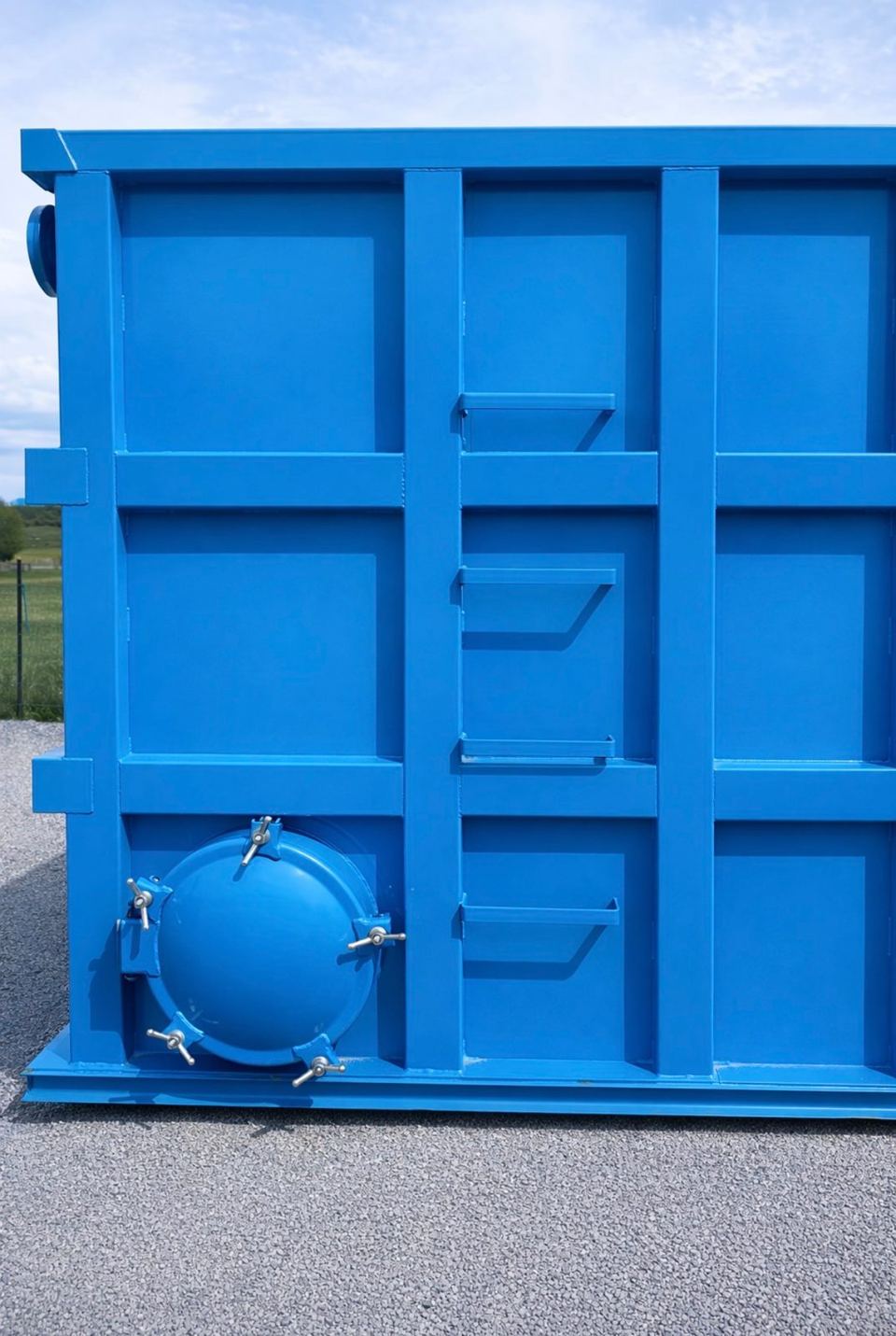
End wall of a blue shop-welded steel tank with a bolted circular manway and welded step brackets, outdoors on gravel
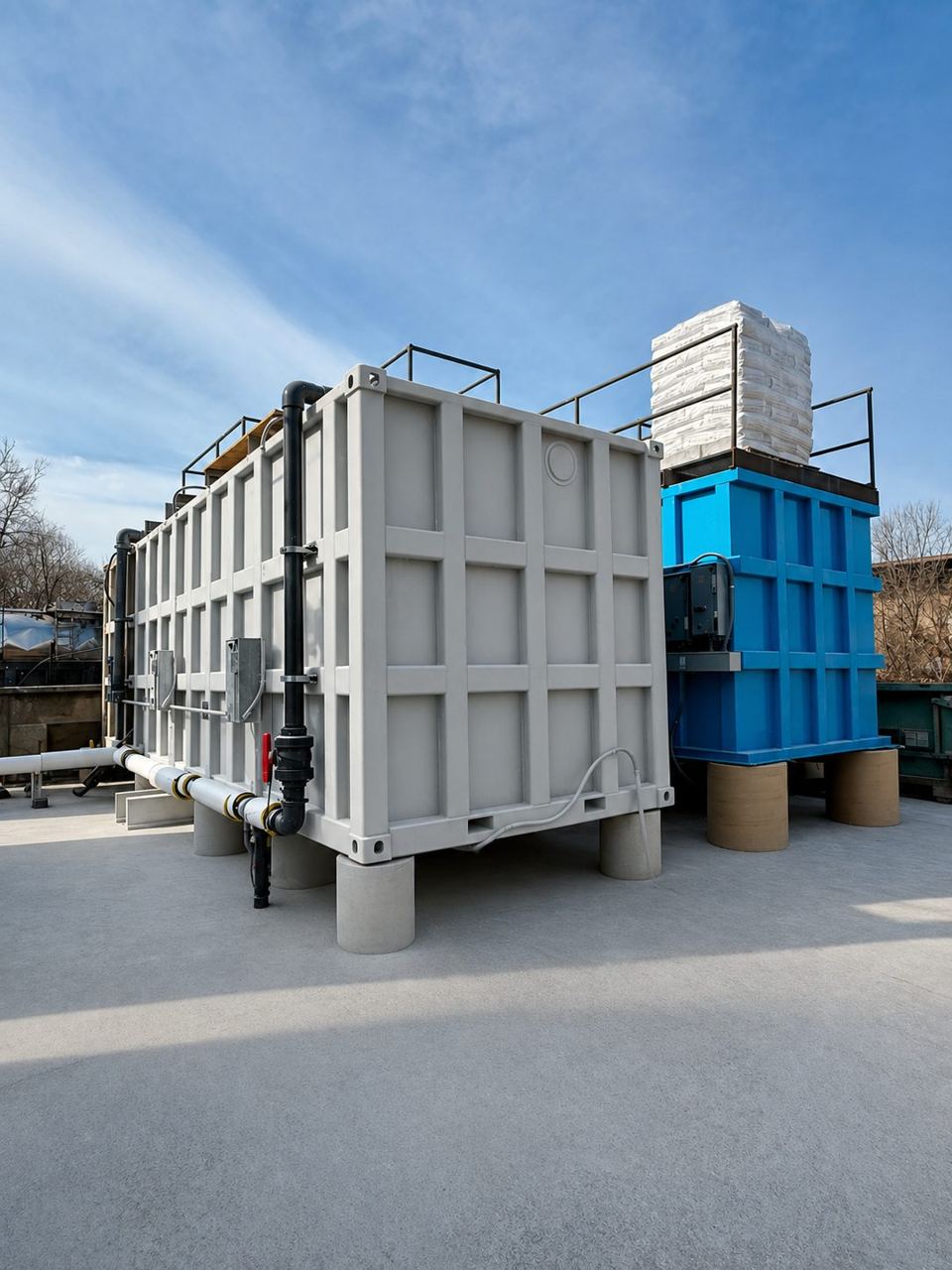
Grey and blue shop-welded steel tanks installed on concrete pier supports with process piping and handrails at a water-treatment site
Three-quarter view of a single bright blue shop-welded steel tank staged outdoors on gravel, reinforced panel grid and a flatbed trailer alongside
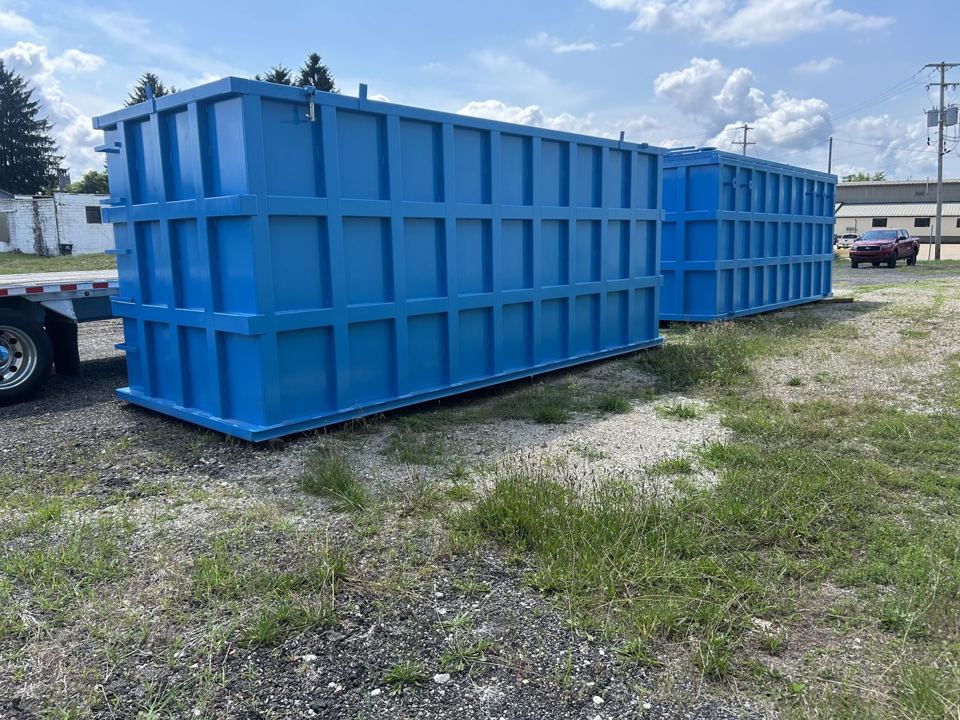
Pair of bright blue open-top shop-welded steel tanks staged side by side in a grassy yard, externally reinforced panel walls under a clear sky
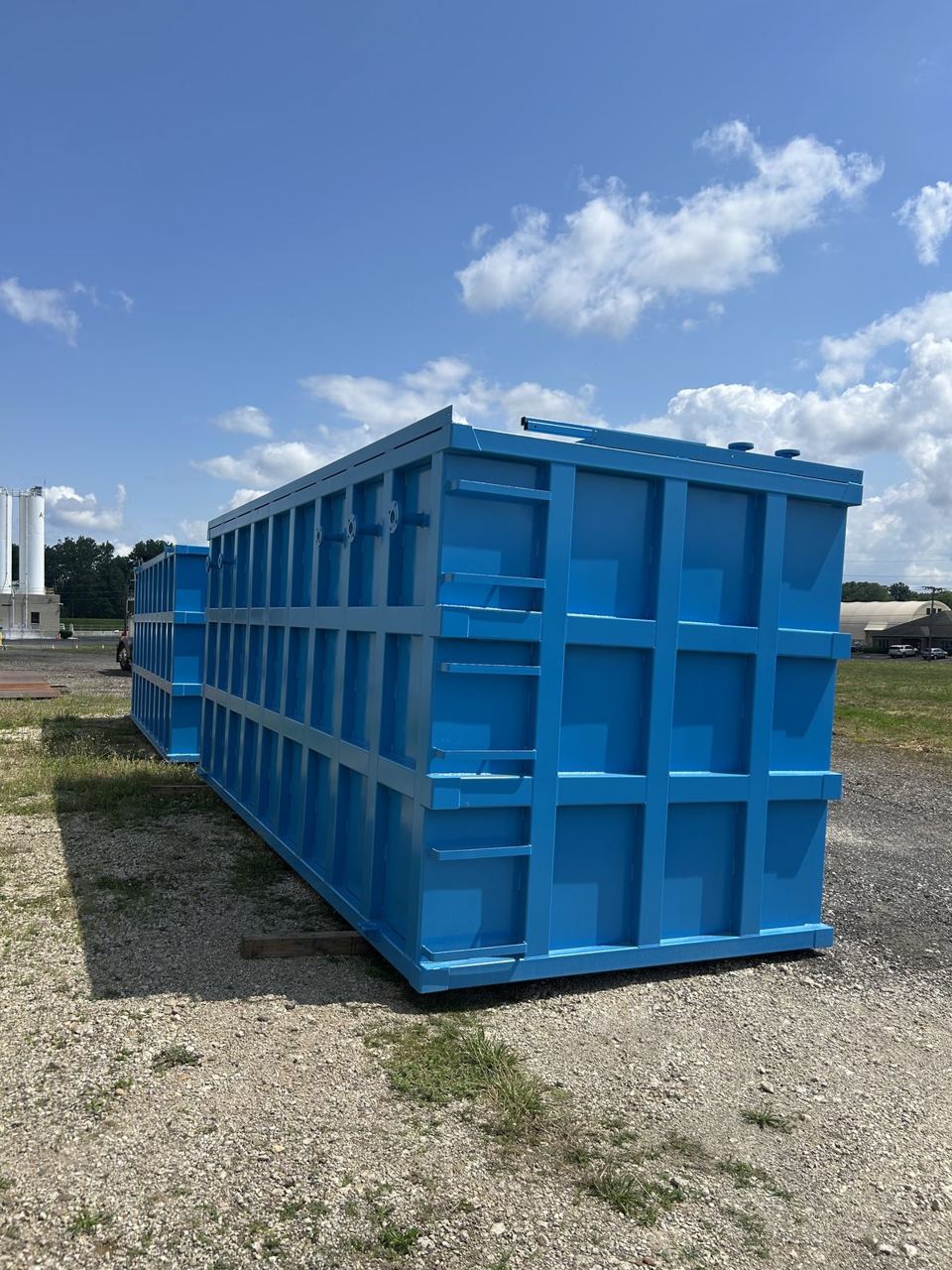
Long bright blue shop-welded steel tank in three-quarter perspective with top-edge nozzles and a reinforced panel grid running its full length outdoors
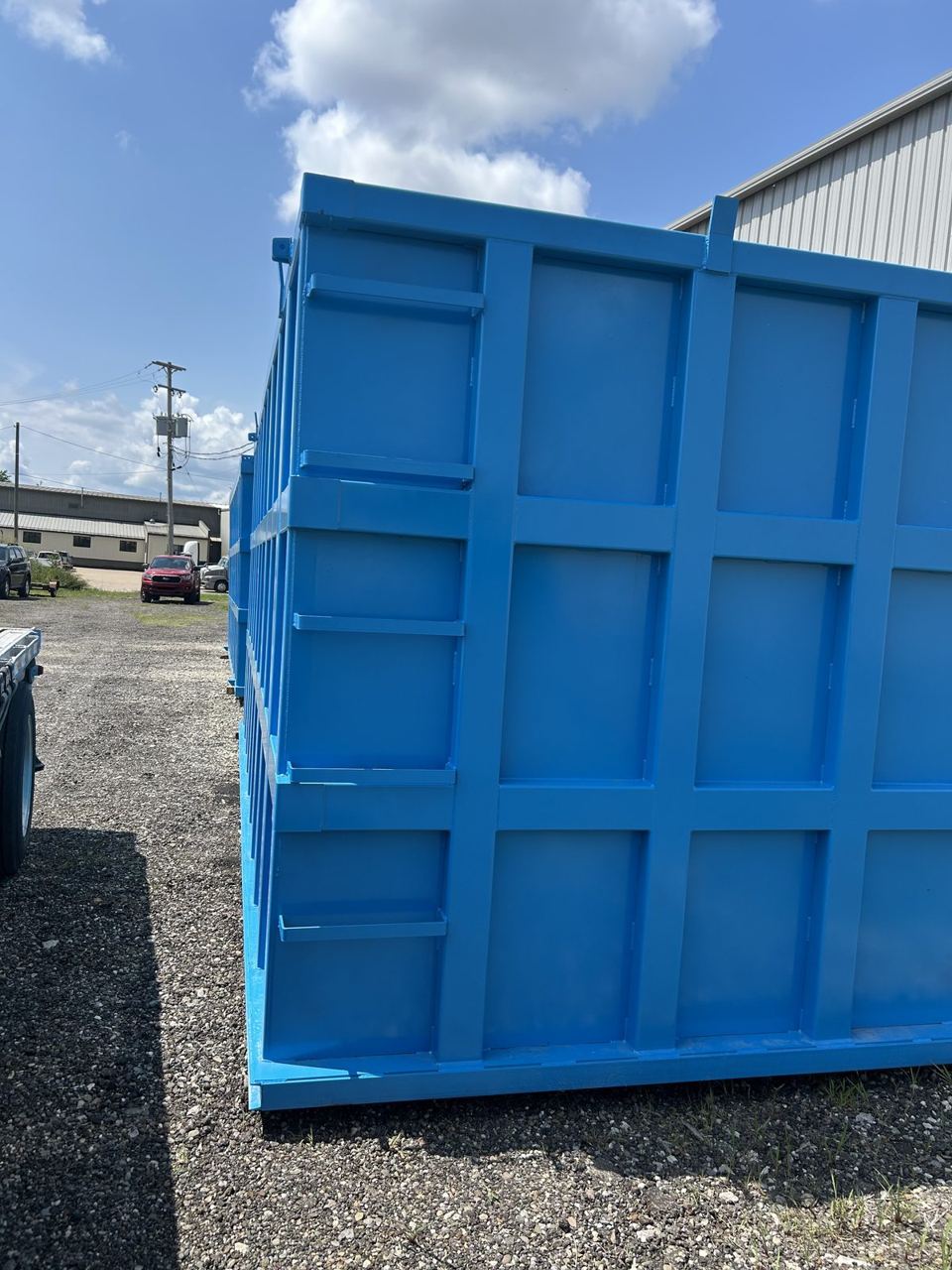
Close-up of the externally reinforced panel grid and welded bracing on the side wall of a bright blue shop-welded steel tank in the yard
Scroll to browse projects
AWS D1.1
Structural welding code — steel
ISO 9001
Quality management systems
API 650 J
Shop-assembled welded storage tanks
UL 142
Aboveground steel tanks, flammable liquids
AWWA D100
Welded carbon steel water storage
ASME VIII-1
Pressure vessels, when pressure-rated
NSF/ANSI 61
Potable water contact linings
ASCE 7
Wind, seismic, and snow loads
OSHA 1910
Field safety & fall protection
Frequently Asked

Answers before you submit.

A round (cylindrical) steel tank that is rolled, welded, tested, and coated entirely in the plant, then delivered to your site as one finished unit. Shell plate is rolled to diameter, the longitudinal and circumferential seams are welded full penetration and inspected, heads, nozzles, and manways are fitted, and the interior lining and exterior coating are applied and cured indoors. Field work is limited to setting, leveling, and connecting.
Capacity, footprint, and service usually decide it. A round shell is the most efficient pressure-resisting geometry, drains cleanly, and is the standard basis for chemical feed, potable, fire-protection, and fuel service, so it is the default for bulk liquid storage. Rectangular tanks win when the footprint is tight or irregular, when a rectangular plan uses the available slab better than a circle, when the capacity you need is larger than what ships as one shell, or when the tank may be added to or relocated later.
Highway transport sets the limit, not the fabrication. Roughly 4 to 12 feet in diameter ships on standard permits, and API 650 Annex J covers shop-assembled tanks up to 20 feet in diameter with a route study. In practice that puts a single delivered shell in the range of about 500 to 50,000 gallons. Above that we move to a field-erected bolted or welded tank, and we tell you where the crossover lands for your site.
API 650 Annex J for shop-assembled welded storage tanks, UL 142 for aboveground steel tanks in flammable and combustible liquid service, AWWA D100 for welded carbon steel water storage, and ASME Section VIII Division 1 when the vessel carries a pressure rating. Welding is AWS D1.1 under ISO 9001 quality management, and potable service uses NSF/ANSI 61 certified linings. We confirm the governing code with you before fabrication starts.
Bolted tanks ship as flat panels assembled with bolts and gaskets in the field. Shop-welded tanks ship as factory-built sections that are crane-set and compression-sealed at the joints, with no field welding. Bolted excels at very large diameters and easy future expansion; shop-welded excels at fast deployment with shop-grade weld and coating quality. We will recommend the right approach for your site, schedule, and service.
It depends on size and site access, but moving welding and coating into the plant typically removes weeks of weather-sensitive field work and lets foundation and fabrication run in parallel. A round tank that ships complete compresses it further, because there is no field assembly at all. We give you a realistic delivery and field-set window with the quote.
Modules are crane-set and compression-sealed at the stacking joints — there is no field welding. Moving every structural weld and the coating into the shop is the entire point of shop welding: each weld is laid under fixtures with controlled heat input and documented inspection, then the finished modules are simply set and sealed on site.
Both, for either family. We can deliver modules or a finished round tank to your erector, or provide supply-and-set with single-point accountability, bundled with foundations, coatings, covers, and accessories.
Round Tank Inquiry

Tell us the service. We’ll size the shell.

Round tanks are quoted by our engineering team rather than a configurator, because diameter, orientation, code basis, and lining all move together. Send the capacity, the stored liquid, and the site, and a configuration-specific quote comes back within 24 hours.

What to sendCapacity, or diameter × height. The stored liquid, its temperature, and its concentration. Vertical, cone-bottom, or horizontal. Operating pressure and vacuum, if any. Code basis if your spec names one — API 650 Annex J, UL 142, AWWA D100, or ASME Section VIII. Interior lining requirements, a nozzle schedule if you have one, and the delivery address so we can run a route check on the shipped diameter.
Ready When You Are

One source. Every line.

Tanks, covers, coatings, accessories, and technical review combine in a single configured quote. Give us 24 hours and a project address.