
FBE coating failure: blistering, chalking and undercutting.
Fusion-bonded epoxy is a durable factory coating, but it fails in recognizable ways. Which failure you have, and how much of the tank it covers, decides between spot repair and a full reline.
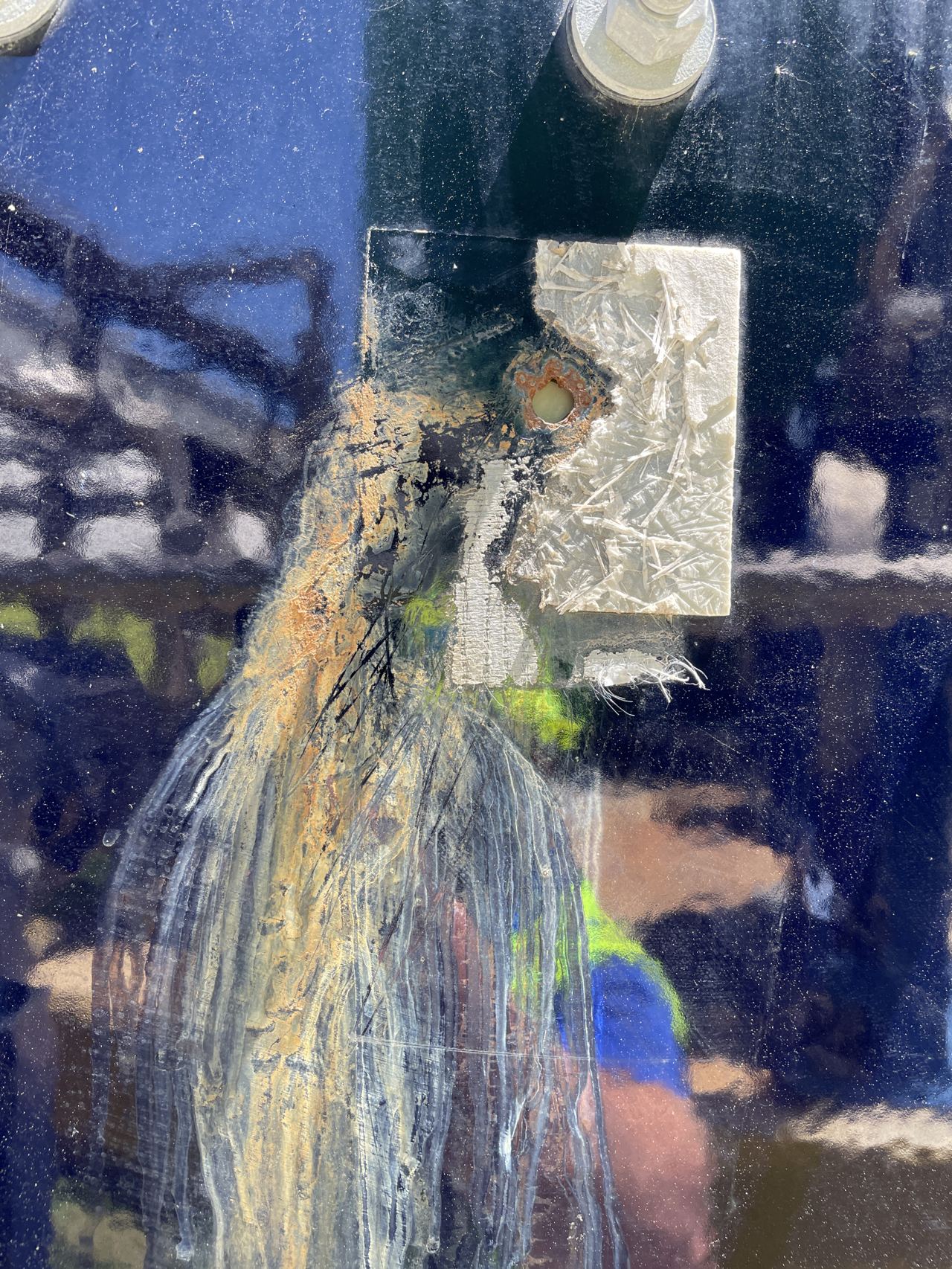
FBE tank coatings fail by blistering (chemical, osmotic or cathodic disbondment), undercutting from holidays and mechanical damage, edge and bolt-hole corrosion where the film is thinnest, chemical attack in low-pH or H₂S service, and UV chalking on exterior surfaces. Isolated damage on an otherwise sound coating can be spot-repaired with a compatible liquid system; widespread loss of adhesion calls for a reline.
Five ways FBE fails, and what each one means.
| Failure | What it looks like | Usual cause | Typical response |
|---|---|---|---|
| Blistering | Raised domes in the film, intact or broken, often in immersion zones | Service chemistry or temperature beyond the coating’s rating, surface contamination, cathodic disbondment | Test adhesion around blisters; spot repair if local, reline if widespread |
| Undercutting | Rust creeping under the film outward from a scratch, holiday or damaged area | Holidays, erection or impact damage left unrepaired | Remove undercut film back to sound coating, prepare and repair |
| Edge & bolt-hole corrosion | Rust at panel edges, seams and around bolt heads | Thinner film at edges, moisture under seam sealant | Seam and fastener rehabilitation; see leaking seams |
| Chemical attack | Softened, discolored or eroded film, often worst in the headspace | Low pH, hydrogen sulfide forming sulfuric acid in the vapor space, solvents, high temperature | Re-select the lining for the real service; usually a reline |
| Chalking | Powdery, faded exterior surface | UV breakdown of epoxy | Mostly cosmetic; topcoat if worn thin or rusting |
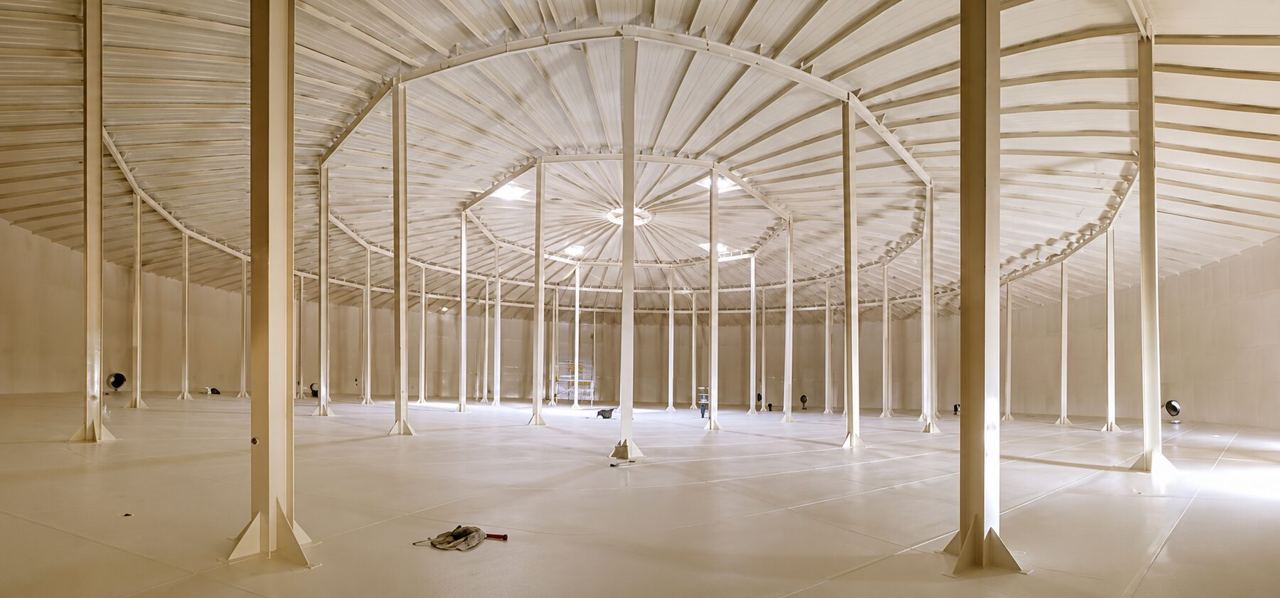
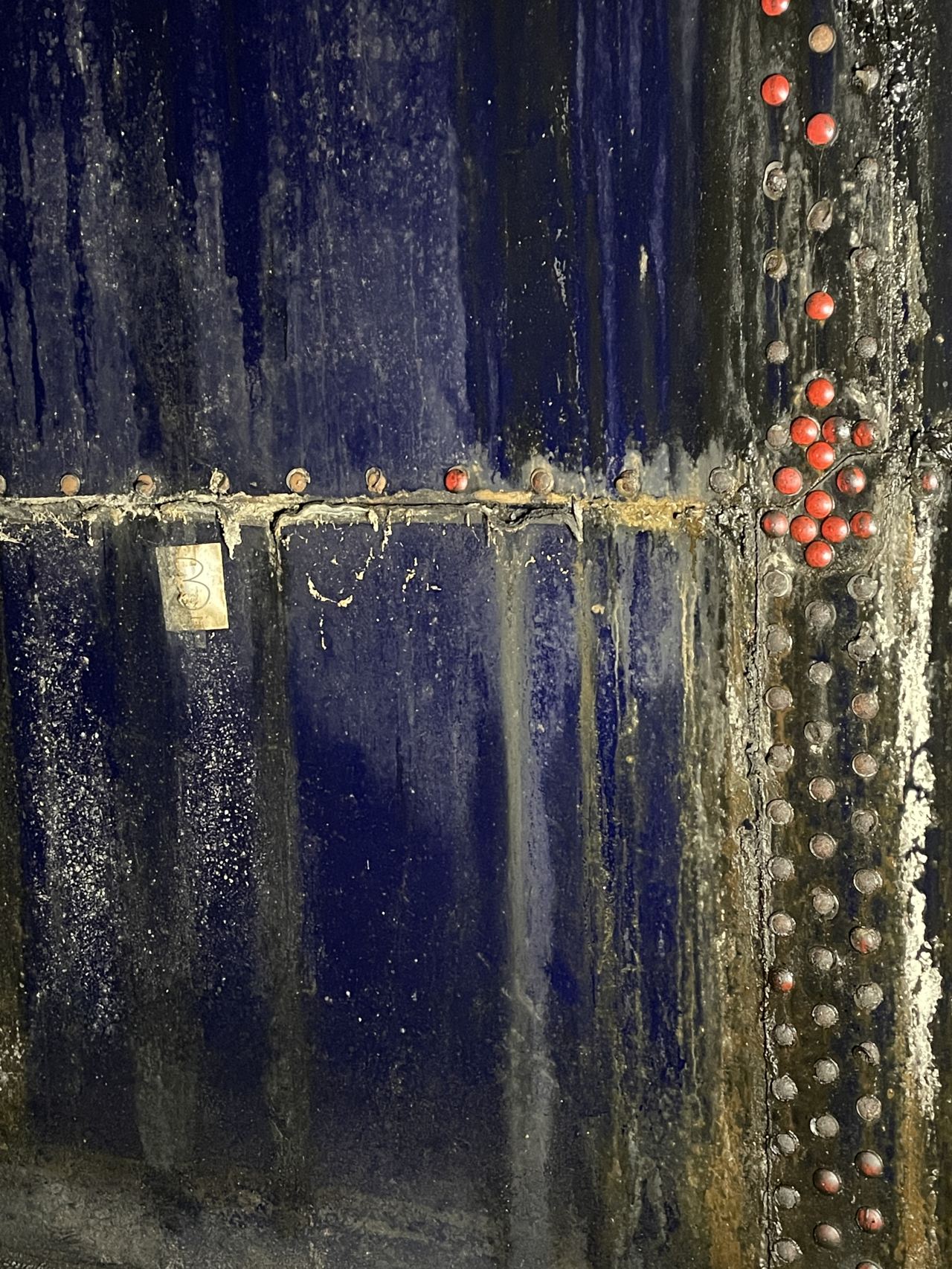
The coating was right for water, not for this service
The most common cause of early lining failure is a mismatch between the coating and what is actually in the tank. A standard epoxy in an anaerobic digester, a low-pH industrial stream or a hot process can blister and disbond within a few years. Our lining selector by service condition starts from the fluid and names the systems to avoid. See also the coating mismatch failure mode.
Each zone sees a different environment
Immersion, the splash zone at the operating level, and the vapor space above it are three different corrosion problems. In wastewater and digester service, hydrogen sulfide in the headspace can oxidize to sulfuric acid on the roof and upper shell, so the coating there fails first even when the immersion zone looks fine.
Holidays become anodes
Any pinhole or holiday in the film concentrates corrosion on a small area of exposed steel. Without working cathodic protection in immersion service, those spots pit quickly. Cathodic protection gaps and continuous monitoring with HolidayGuard™ catch this before it becomes a leak.
How an inspector measures coating condition.
Photos tell you what to look at. Measurements tell you whether it is local or systemic.
- SSPC-PA 2Dry film thickness measurement: is there enough coating left?
- ASTM D3359 / D4541Adhesion by tape test or pull-off: is it still bonded?
- ASTM D714Degree of blistering: size and frequency of blisters.
- ASTM D610Degree of rusting on painted steel surfaces.
- ASTM D4214Degree of chalking on exterior films.
- NACE SP0188Holiday (discontinuity) testing of protective coatings.
- AWWA D103Design and factory coating of bolted steel water tanks.
- NSF/ANSI/CAN 61Required for any repair coating in contact with potable water.
Spot repair or reline?
Spot repair makes sense when adhesion is good across most of the tank and the damage is isolated: erection scratches, impact damage, a few blisters. When adhesion is poor across large areas, blistering is general, or the coating was wrong for the service from the start, repairs become a cycle. A full reline with a correctly selected system resets the clock. See reline or replace a bolted tank and our coatings and linings scopes.
FBE coating failure FAQ
What is FBE coating on a storage tank?
Fusion-bonded epoxy (FBE) is a powder epoxy applied to blasted steel panels in the factory and cured with heat, so it bonds to the steel as a continuous film. It is the standard factory coating on many bolted steel water and wastewater tanks built to AWWA D103. Because it is applied and cured under controlled conditions, it performs well, but it cannot be re-fused in the field. Field repairs use compatible liquid coatings.
Why is the epoxy coating on my tank blistering?
Blisters form when the film loses adhesion and liquid or gas collects beneath it. Common causes are a lining exposed to a chemistry or temperature it was not formulated for, osmotic blistering from contamination left on the steel, cathodic disbondment around an over-driven cathodic protection system, and holidays that let water reach the steel and creep under the film. Intact blisters that have not broken through are an early warning; ruptured blisters with rust beneath them mean the steel is corroding.
Is chalking on the outside of an epoxy tank a problem?
Usually not structurally. Epoxies chalk, forming a powdery surface, when exposed to sunlight. It is mostly cosmetic and is why many exterior systems carry a UV-resistant topcoat. Chalking that has worn through to bare steel, or that comes with rust, does need attention.
Can FBE coating be repaired in the field?
Yes, with liquid coating systems compatible with FBE, applied over properly prepared surfaces. Spot repairs suit isolated damage on a coating that is otherwise sound. When failure is widespread, a full interior reline with a system matched to the service, certified to NSF/ANSI/CAN 61 for potable water, is usually the better investment.
How is tank coating failure measured?
An inspector measures dry film thickness (SSPC-PA 2), adhesion (ASTM D3359 tape test or ASTM D4541 pull-off), the degree of blistering (ASTM D714), rusting (ASTM D610), chalking (ASTM D4214), and holidays using a holiday detector (NACE SP0188). Those numbers, mapped over the tank, show whether the damage is local or systemic.
Related tank problems
Last reviewed 2026-11-09. General guidance only; a condition assessment of the actual tank governs any repair decision.
Blistering or peeling coating? Send photos for a free review.
Send a wide shot and close-ups of the worst areas, plus what the tank holds. A credentialed inspector reviews them remotely at no cost and tells you whether it looks local or systemic.
- Send 3–4 photos and the nameplate. One wide shot of the whole tank, close-ups of the problem, and the data plate if you can reach it.
- An inspector reviews them remotely. We look for the likely failure mode and how far along it is.
- You get a short written screening. It says whether this can wait, should be scoped for an inspection, or needs attention now.
A desk screening is an informal read from photos, not an inspection, condition rating or fitness-for-service finding. If the tank is actively leaking or you suspect structural failure, call 330-265-1776 now. Prefer a full site inspection? Request one here.