
Leaking bolted tank seams: causes, urgency and repair.
Most bolted tank seam leaks start with the sealant between the panels, not the steel. The location and stain pattern usually tell you which failure you have and how urgent it is.
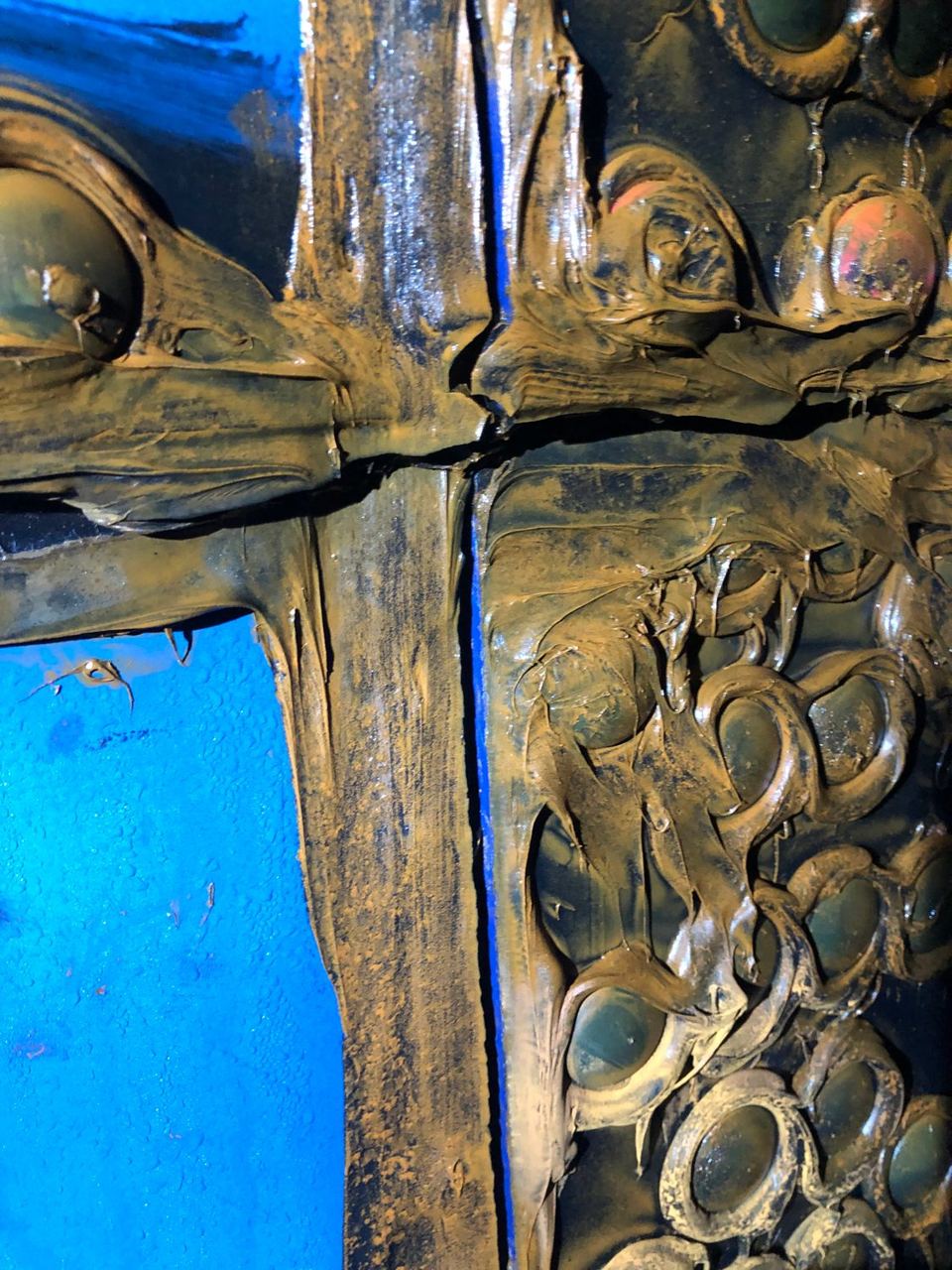
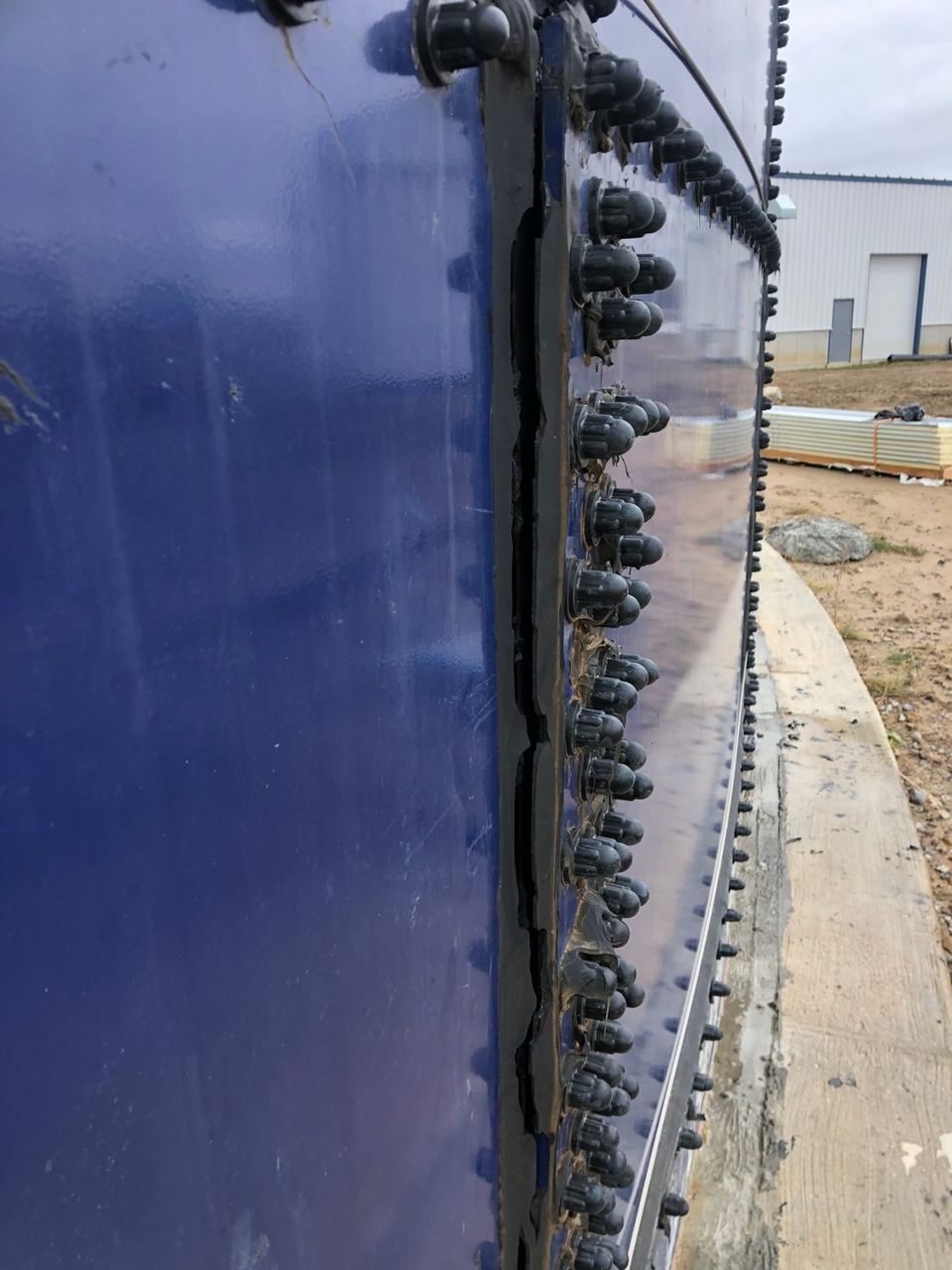
A bolted steel tank leaks at a seam when the sealant between overlapping panels fails (age, UV, temperature or chemical incompatibility), when bolts lose tension or corrode, when settlement or freeze damage opens the joint, or when corrosion at the panel edge undermines the seal. A damp seam can usually be scheduled; rust staining, a growing drip or any shell distortion needs prompt assessment.
Read the leak before you fix it.
Where the water shows up, and what comes with it, narrows the cause quickly.
| What you see | Most likely cause | Urgency |
|---|---|---|
| Damp or dark line along a seam, no rust | Aged or shrunken sealant, early loss of adhesion | Schedule a repair |
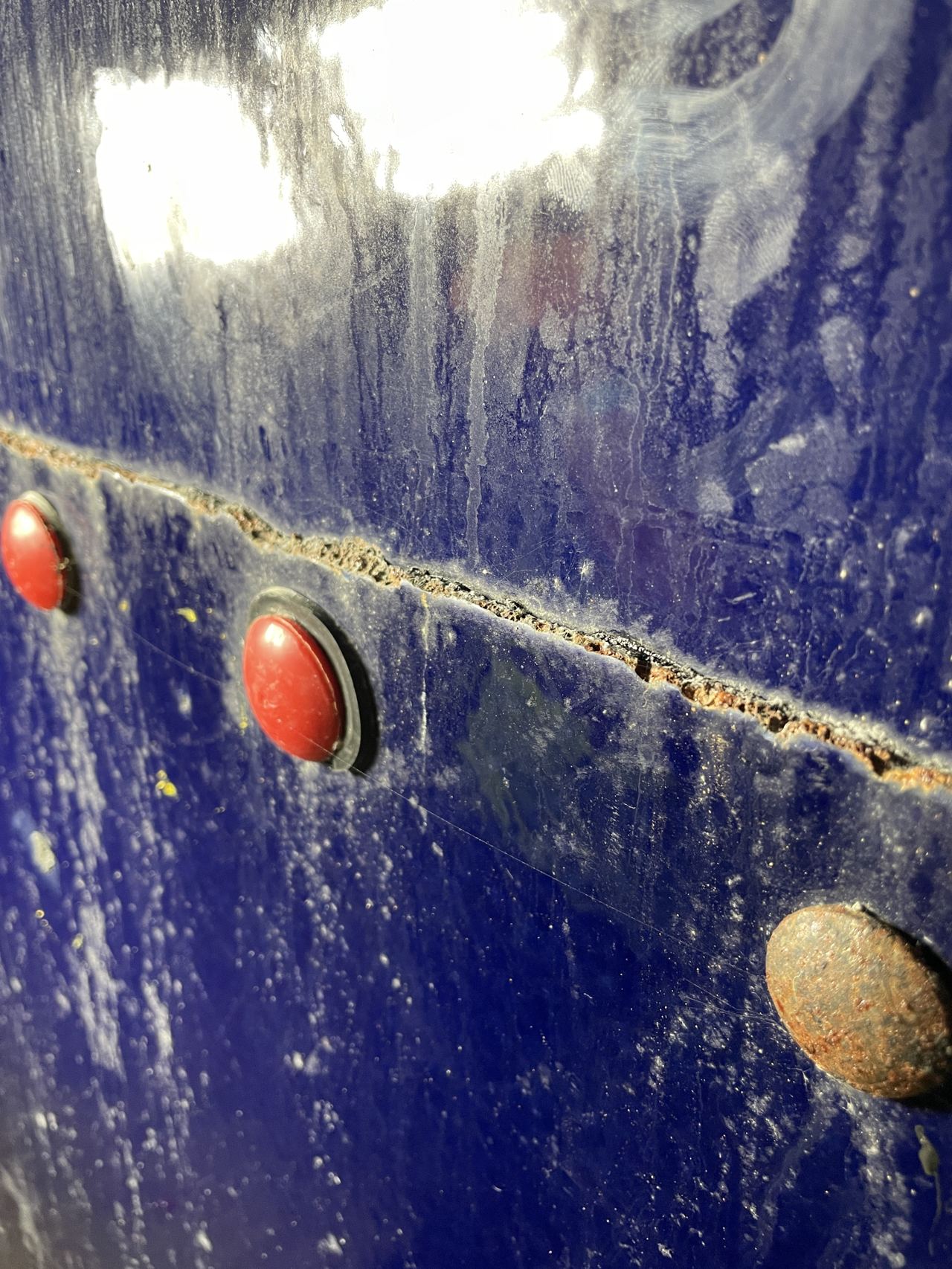
| Rust streaks running down from a seam or bolt line | Corrosion at the panel edge or bolt holes under the sealant | Assess soon; metal loss is under way |
| Leaks concentrated on the bottom ring or the floor-to-shell joint | Highest hydrostatic head, settlement, or chime corrosion | Assess soon |
| Vertical seam leaks that come and go with the seasons | Thermal cycling or freeze-thaw working the joint | Schedule before winter |
| Leaks after a level change, new pump or new contents | Sealant incompatible with the new service or temperature | Review the service, then repair |
| Steady drip that is getting worse, visible gap, bulging shell | Seam opening, structural movement or foundation failure | Urgent: lower the level if safe and call |
1. Sealant at the end of its life or wrong for the service
Bolted tanks rely on a mastic, tape or gasket sealant compressed between overlapping panels. Over years of UV, temperature swings and contact with the stored liquid, it hardens, takes a set and stops following the movement of the joint. A sealant chosen on price rather than for the actual chemistry and temperature can fail much sooner. See the sealant and gasket failure mode.
2. Fastener tension and corrosion
Seam bolts hold the sealant in compression. Loss of tension, corroded bolt heads or nuts, and galvanic attack where fastener and panel metals differ all let the joint relax. Galvanic and dissimilar-metal coupling is a frequent contributor on older tanks.
3. Foundation settlement
Differential settlement of the ringwall or slab distorts the shell and opens seams, usually starting on the bottom ring. If leaks cluster on one side of the tank, check the foundation before resealing. Foundation systems.
4. Edge and bolt-hole corrosion
Panel edges and bolt holes are where factory coatings are most exposed. Once moisture gets under the sealant, corrosion can travel along the edge out of sight, showing up first as rust staining.
From exterior sealing to panel replacement.
The right repair depends on whether the seam is structurally sound and whether corrosion has started on the wetted side.
Exterior seam sealing
Clean and seal the outside of a sound seam with a compatible sealant. The tank can often stay in service. It does not reach interior corrosion.
Interior seam rehabilitation
Drain and clean, remove failed sealant, treat edge corrosion, reseal and replace corroded fasteners. Often combined with interior coating repair.
Fastener & panel replacement
Replace bolts with the correct grade and coating, and replace panels where edge or bolt-hole corrosion has caused real metal loss.
Foundation correction
Where settlement is opening seams, resealing alone will not hold. Address the foundation, then the joint.
Full reline
When many seams and the coating are failing together, a full interior reline may be the better investment. Reline or replace?
What not to do
Don’t caulk over a wet or rusting seam, and don’t over-torque bolts. Both can hide or worsen the damage and make the eventual repair larger.
Standards that apply
Factory-coated bolted water tanks are designed and erected to AWWA D103; repairs should follow the original manufacturer’s seam and torque procedures where available. For potable water, any sealant or coating in contact with the water must be certified to NSF/ANSI/CAN 61. The AWWA M42 manual covers inspection and maintenance of steel water tanks. Operators can use our annual self-inspection checklist and the Bolted Tank Operator’s Guide to track seams between inspections.
Leaking seam FAQ
Why is my bolted steel tank leaking at the seams?
Most seam leaks come from the sealant, not the steel. The mastic or tape sealant between overlapping panels hardens, shrinks or loses adhesion with age, UV and temperature cycling, or it was never compatible with the stored liquid. Other common causes are bolts that have lost tension or corroded, foundation settlement that opens the seam, freeze-thaw damage, and corrosion at the panel edge underneath the sealant.
Is a weeping seam an emergency?
A damp seam or a slow weep with no rust staining is usually a maintenance item to schedule. Rust staining below the seam suggests corrosion at the panel edge or bolt holes and should be assessed soon. A steady drip that is getting worse, flowing water, a gap you can see daylight through, or any bulging or distortion of the shell needs immediate attention. Lower the level if it is safe to do so and call.
Can you fix a leaking bolted tank seam from the outside?
Sometimes. Exterior seam sealing can stop minor weeps on a seam that is structurally sound, and it avoids draining the tank. It does not address corrosion on the wetted side or a sealant that has failed through its full width, so a lasting repair often needs the tank drained, the interior seam cleaned, failed sealant removed and new compatible sealant installed, with any corroded bolts replaced.
Should I tighten the bolts on a leaking seam?
Not without checking first. Bolted tank fasteners are installed to a specified torque against the sealant and coating system. Over-tightening can crush the sealant, crack factory coatings around the bolt hole and make the leak worse. Corroded bolts may also shear. Have the seam assessed, then re-torque or replace fasteners to the manufacturer’s procedure.
How long does bolted tank seam sealant last?
It depends on the sealant chemistry, the stored liquid, temperature and UV exposure. Sealant often ages faster than the coated panels, which is why many bolted tanks need seam work long before the steel needs anything. Matching the sealant to the actual service is one of the specification decisions that most affects tank life.
Related tank problems
Last reviewed 2026-11-09. General guidance only; a condition assessment of the actual tank governs any repair decision.
Leaking seam? Send photos for a free review.
Send a wide shot of the tank and close-ups of the seam and any staining below it. A credentialed inspector reviews them remotely at no cost, with no site visit, and tells you how urgent it is.
- Send 3–4 photos and the nameplate. One wide shot of the whole tank, close-ups of the problem, and the data plate if you can reach it.
- An inspector reviews them remotely. We look for the likely failure mode and how far along it is.
- You get a short written screening. It says whether this can wait, should be scoped for an inspection, or needs attention now.
A desk screening is an informal read from photos, not an inspection, condition rating or fitness-for-service finding. If the tank is actively leaking or you suspect structural failure, call 330-265-1776 now. Prefer a full site inspection? Request one here.