
For municipal water and wastewater systems planning for the next 50 years and beyond, a tank with no coating to fail changes the whole conversation about life-cycle cost, maintenance budgets, and how often a tank has to come out of service.
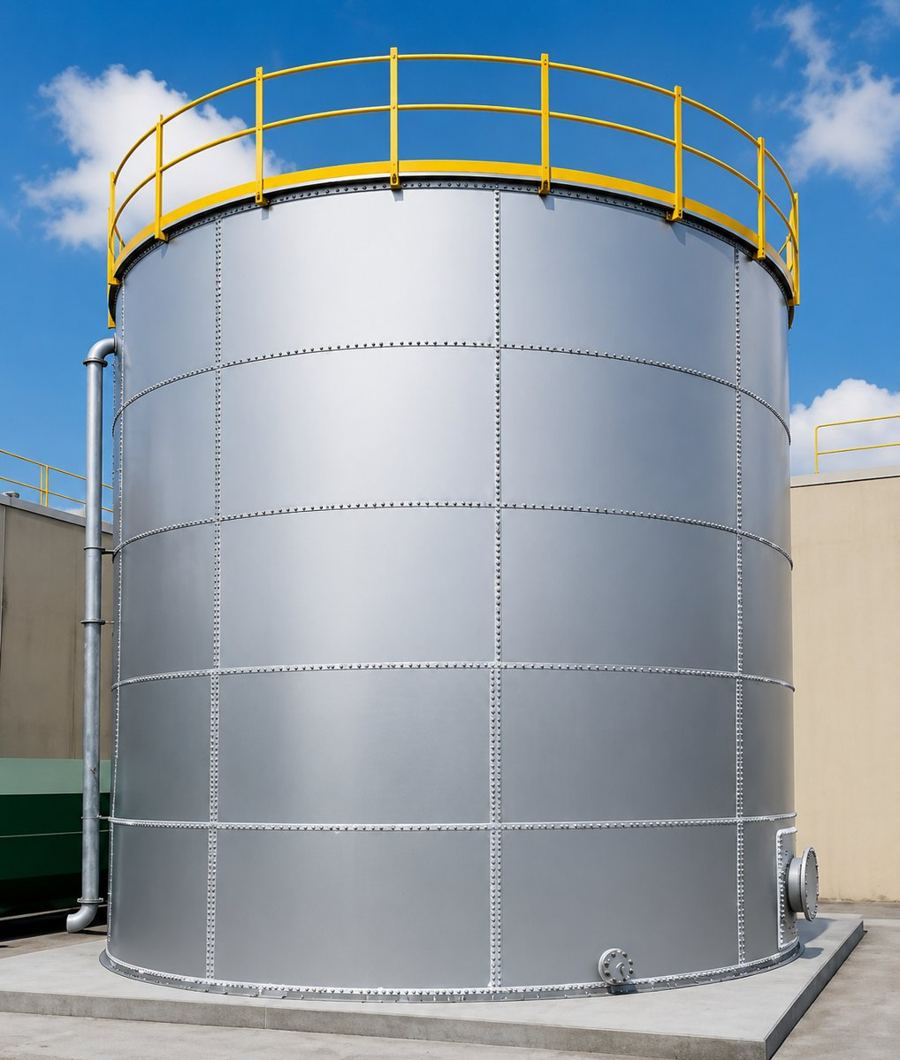
01 Every coating starts a maintenance clock
A coated carbon steel tank relies on a thin barrier to keep water away from steel that wants to rust. That barrier works well while it is intact, but every coating ages. UV, temperature swings, ice, abrasion, and water chemistry all wear on it.
When the barrier is breached, corrosion starts underneath. That leads to a familiar cycle for tank owners:
- Periodic inspections to find holidays, blisters, and undercutting
- Spot repairs, then eventually a full blast-and-recoat
- Taking the tank out of service, arranging temporary storage, and managing containment and disposal
- Cathodic protection systems that need their own monitoring and replacement
None of this makes coated tanks a poor choice. It means their long-term cost includes a recoat schedule that has to be budgeted for decades.
02 With stainless, the metal is the protection
Stainless steel resists corrosion because of what it is made of, not what is painted on it. The chromium in the alloy forms a thin, self-healing passive film on every surface. Scratch it during installation or service, and the film re-forms on its own.
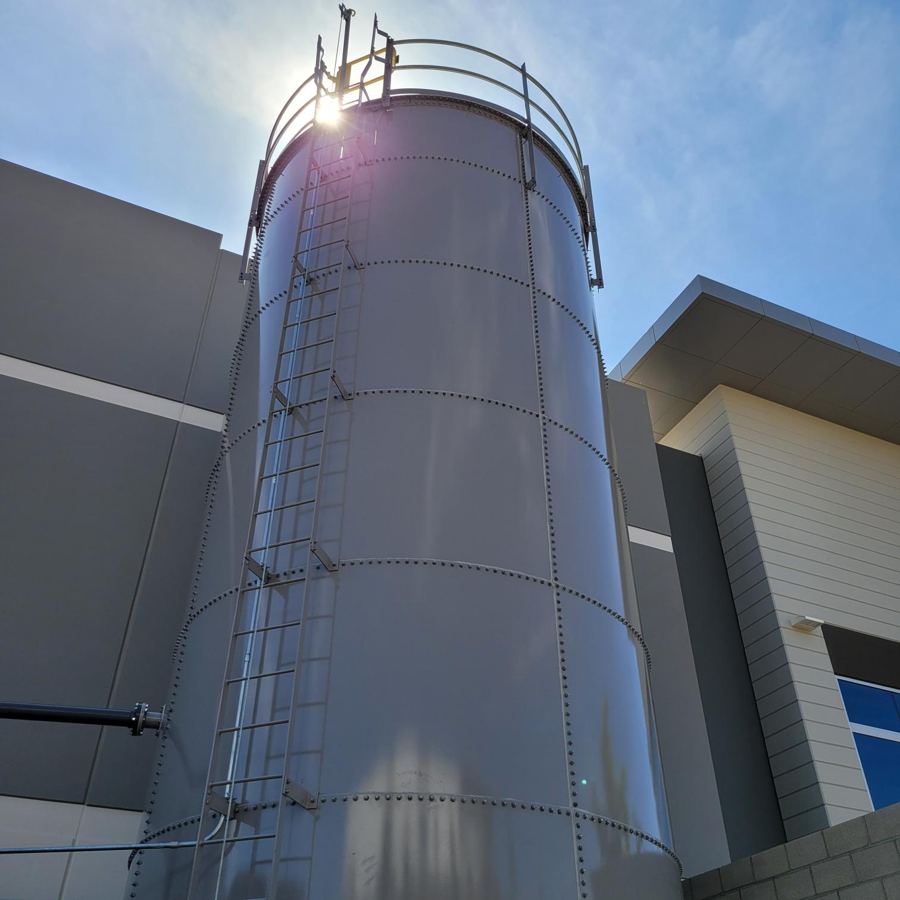
That changes what an owner is responsible for:
- No coating to fail. There is no interior lining or exterior paint system to inspect, repair, or replace.
- No cathodic protection required. The steel does not depend on a sacrificial or impressed-current system to survive.
- No blast-and-recoat projects. No abrasive blasting, no containment, no solvent emissions, no coating waste.
- UV and temperature stable. Sunlight degrades paints and coatings but does not affect stainless, and the steel stays ductile across the full temperature range a municipal tank will see.
- Clean and inert. Stainless is the same material trusted for pharmaceutical water, food processing, and drinking water service.
03 Built for municipal water and wastewater
Stainless bolted tanks fit the full range of municipal storage, from potable water to process tanks at the treatment plant.
| Application | Why stainless fits |
|---|---|
| Potable water storage and standpipes | Inert surface protects water quality, with no lining to degrade or leach |
| Clearwells and treated-water storage | Handles disinfectant residuals without a coating to break down |
| Raw water and pre-treatment | No interior coating exposed to abrasion from sediment |
| Wastewater equalization and process tanks | Wide chemical resistance and no recoat outages on critical process units |
| Fire protection reserves | Long, quiet service life with minimal attention between inspections |
Engineers select the stainless grade, such as 304 or 316, based on chlorides, disinfectant type, and conditions in the vapor space above the water. Getting that choice right at design is what delivers the long service life.
04 A tank you can plan around for generations
With the right grade and routine inspection, a stainless bolted tank can serve a community for 50 years and beyond. Over that span a coated tank would go through several coating cycles, each with its own outage, contractor, and capital request.
Minimal maintenance does not mean no attention. A well-run stainless tank still gets:
- Periodic visual inspection, inside and out
- A check of bolts, gaskets, and sealant at panel seams
- Sediment removal and cleaning on the utility's normal schedule
- Care of appurtenances such as vents, hatches, ladders, and the base setting ring
What it does not get is a recoat. Removing that line item is where most of the life-cycle savings come from, and it is why stainless often wins once the full ownership cost is on the table instead of just the bid price.
05 Where fusion bonded epoxy-coated tanks still fit
Fusion bonded epoxy (FBE) coated bolted tanks remain a strong, proven choice, and we specify them regularly. The epoxy powder is factory-applied and heat-cured onto each panel under controlled conditions, which makes it far tougher and more consistent than a field-applied paint. Still, it is a coating on carbon steel, so its long-term performance depends on that coating staying intact, especially at panel edges, bolt holes, and anywhere it is damaged during shipping or erection.
| Property | Stainless Steel Bolted | FBE-Coated Bolted |
|---|---|---|
| Corrosion protection | The alloy itself | Factory-cured epoxy coating over carbon steel |
| Surface damage | Passive film self-heals | Needs touch-up to protect the steel below |
| Cathodic protection | Not required | Often specified |
| Long-term risk | Grade selection | Coating defects, edges, and fasteners |
| Best fit | Owners prioritizing the longest life and lowest upkeep | Projects where first cost leads and coating care is planned |
The right answer depends on water chemistry, budget, and how long the owner plans to keep the tank. We help you weigh both honestly. For more on the coated option, see The Recoatable Advantage: Epoxy-Coated Tanks.
06 Why Tarsco Bolted Tank
Tarsco Bolted Tank, a TF Warren Group company, engineers, manufactures, and erects stainless steel bolted tanks up to 5,000,000 gallons. One company carries the project from concept to commissioning.
- In-house engineering. Approval drawings, tank and foundation design calculations, and design for any seismic zone, wind load, or deck load. PE stamps are available for all states.
- Project management. One assigned contact from layout and specification through completion.
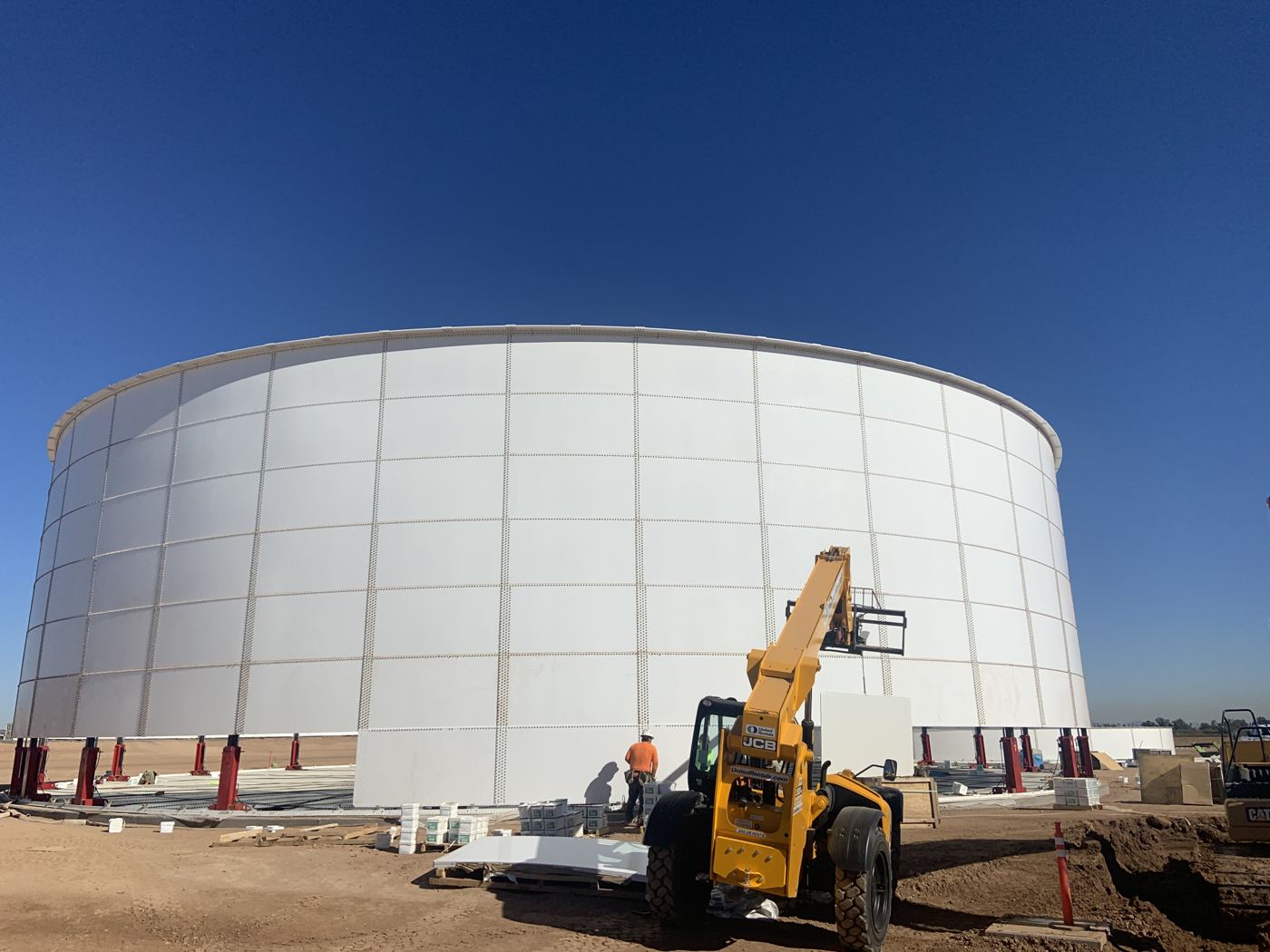
- Safer, faster erection. Ground-level jacking avoids large cranes. Bolted construction ships economically and eliminates field welding.
- Factory-trained crews. Tarsco erects its own tanks with direct-employee crews who complete more than 120 hours of in-house safety training, backed by an EMR well below the industry average.
- Complete service. Hydrostatic testing, commissioning, insulation systems, and post-job support.
- Future flexibility. Bolted tanks can be expanded or relocated, which protects their residual value.
07 Plan your next tank around its whole life
Replacing an aging coated tank, adding storage, or writing a new specification? Start with the question that matters most: what will this tank cost to own over 50 years, not just to build?
TanksandCovers.com works with owners, engineers, and contractors nationwide to match the right tank to the service. Send us your capacity, site, and water chemistry, and we will help you compare stainless and fusion bonded epoxy-coated options side by side.
Andrew Feucht, Founder & Principal
(330) 265-1776 · Andy@TanksandCovers.com
When it comes to storage tanks, we have you #Covered.